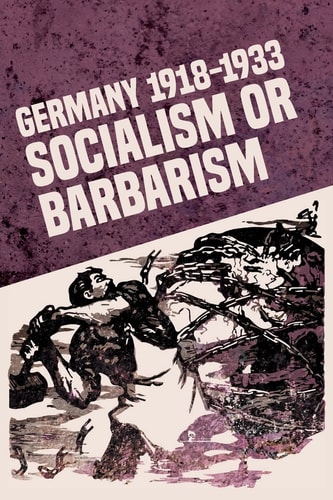
Germany 1918-1933: Socialism Or Barbarism
0
0
As an Amazon Associate and affiliate partner, Menrva Books earns from qualifying purchases. Learn more
Author Description
Germany 1918-33 was one of the most tumultuous periods in history. Following the revolution in Russia, the German workers and soldiers attempted to seize power in November 1918. Unfortunately, the revolution was betrayed by the Social Democratic leaders. Further revolutionary convulsions rocked Germany from 1919 to 1923. By this time, a mass Communist Party had been formed, but following advice from Zinoviev and Stalin, a classical revolutionary opportunity in 1923 was missed. This was a blow, not only in Germany, but internationally. The German defeats served to strengthen the grip of the Stalinist bureaucracy in Russia. This resulted in zig-zags of policy between opportunism and ultra-leftism, which paved the way for the 'Third Period' with the Social Democrats regarded as the main enemy. With the rise of fascism, Leon Trotsky described Germany in 1931 as "the key to the international situation." "On the direction in which the solution of the German crisis develops will depend not only the fate of Germany herself (and that is already a great deal), but also the fate of Europe, the destiny of the entire world, for many years to come," he explained. Trotsky called for a United Front against fascism, but this was rejected by the Stalinists. This paved the way for the victory of the Nazis, leading to the Holocaust and the Second World War with its 55 million dead. In this book, Rob Sewell argues that all this was not inevitable, and analyses those events, drawing out the lessons for today.
Menrva's Summary
THE THESIS
The book investigates the critical period in German history between the end of World War I and the rise of Nazism, exploring the potential for a socialist revolution and the factors that led to its failure. Rob Sewell analyzes the tumultuous events following the 1918 revolution, the betrayal by Social Democratic leaders, and the subsequent revolutionary attempts between 1919 and 1923. The text examines the missed revolutionary opportunity in 1923, influenced by advice from Zinoviev and Stalin, and its international repercussions, including the strengthening of the Stalinist bureaucracy in Russia. It further details the policy zig-zags and the rise of fascism, highlighting Trotsky's call for a United Front against it, which was rejected by the Stalinists, ultimately paving the way for the Nazi victory.
THE SCOPE MAP
- Analysis of the German Revolution of 1918-1919 and its immediate aftermath.
- Examination of the revolutionary convulsions from 1919 to 1923.
- Discussion of the missed revolutionary opportunity in 1923 and its consequences.
- Exploration of the impact of Stalinist bureaucracy on policy and international relations.
- Analysis of the rise of fascism and Trotsky's call for a United Front.
- Argument that the Nazi victory and subsequent events were not inevitable.
- Drawing out lessons from the historical events for contemporary relevance.
THE AUTHORITY PERSPECTIVE
This book offers a detailed historical analysis of a pivotal period in 20th-century German history, focusing on the interplay between socialist movements, political leadership, and the rise of fascism. The author's argument suggests that the tragic outcomes of this era were not predetermined, inviting readers to consider alternative historical trajectories and their implications. The work aims to provide lessons for contemporary political analysis by examining the strategic decisions and ideological conflicts of the time. The perspective presented is critical of the leadership decisions that, in the author's view, led to the failure of socialist revolution and the subsequent rise of Nazism.
Page Count:
490
Publication Date:
2018-01-01
Publisher:
Wellred Books
ISBN-10:
1900007959
ISBN-13:
9781900007955
Politics
History
Non-Fiction
Socialism
Community Tags
Similar Books