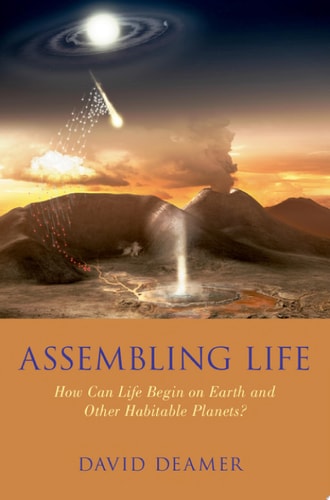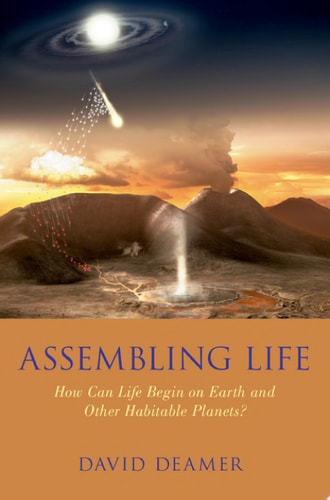
Assembling Life
0
0
As an Amazon Associate and affiliate partner, Menrva Books earns from qualifying purchases. Learn more
Author Description
In Assembling Life, David Deamer Addresses Questions That Are The Cutting Edge Of Research On The Origin Of Life. For Instance, How Did Non-living Organic Compounds Assemble Into The First Forms Of Primitive Cellular Life? What Was The Source Of Those Compounds And The Energy That Produced The First Nucleic Acids? Did Life Begin In The Ocean Or In Fresh Water On Terrestrial Land Masses? Could Life Have Begun On Mars? The Book Provides An Overview Of Conditions On The Early Earth Four Billion Years Ago And Explains Why Fresh Water Hot Springs Are A Plausible Alternative To Salty Seawater As A Site Where Life Can Begin. Deamer Describes His Studies Of Organic Compounds That Were Likely To Be Available In The Prebiotic Environment And The Volcanic Conditions That Can Drive Chemical Evolution Toward The Origin Of Life. The Book Is Not Exclusively Earth-centric, But Instead Considers Whether Life Could Begin Elsewhere In Our Solar System. Deamer Does Not Propose How Life Did Begin, Because We Can Never Know That With Certainty. Instead, His Goal Is To Understand How Life Can Begin On Any Habitable Planet, With Earth So Far Being The Only Known Example.
Menrva's Summary
THE THESIS
This book investigates the chemical and environmental conditions required for non-living organic compounds to transition into the first forms of primitive cellular life. David W. Deamer, a researcher in the field of membrane biophysics and the origin of life, synthesizes decades of experimental data and geological theory to propose a framework for how life might emerge on habitable planets. He evaluates the plausibility of fresh water hot springs versus marine environments as the cradle for early biological systems.
THE SCOPE MAP
What You Will Find
- Analysis of prebiotic organic compounds and their availability on early Earth.
- Examination of volcanic conditions and their role in driving chemical evolution.
- Comparative study of terrestrial hot springs versus oceanic environments for life synthesis.
- Discussion of potential life-bearing conditions on other planets within our solar system.
Scope Limits
- The text does not claim to provide a definitive historical account of how life began on Earth.
- It does not cover complex biological evolution beyond the initial formation of primitive cells.
THE AUTHORITY PERSPECTIVE
Experts recognize this work as a clear, accessible synthesis of complex biochemical research regarding the origins of life. Readers frequently note that the prose remains approachable for those with a basic scientific background while providing enough technical detail to satisfy those interested in current astrobiological research.
Page Count:
224
Publication Date:
2018-01-01
Publisher:
Oxford University Press
ISBN-10:
019064639X
ISBN-13:
9780190646394
Science
Astrobiology
Chemistry
Origin of Life
Evolutionary Biology
Biology
Community Tags
Other Editions(2)

Similar Books