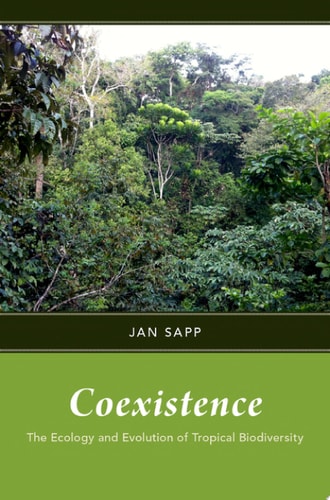
Coexistence
0
0
As an Amazon Associate and affiliate partner, Menrva Books earns from qualifying purchases. Learn more
Author Description
This Book Is About Tropical Biology In Action- How Biologists Grapple With The Ecology And Evolution Of The Great Species Diversity In Tropical Rainforests And Coral Reefs. Tropical Rainforests Are Home To 50% Of All The Plant And Animal Species On Earth, Though They Cover Only About 2% Of The Planet. Coral Reefs Hold 25% Of The World's Marine Diversity, Though They Represent Only 0.1 % Of The World's Surface. The Increase In Species Richness From The Poles To The Tropics Has Remained Enigmatic To Naturalists For More Than 200 Years. How Have So Many Species Evolved In The Tropics? How Can So Many Species Coexist There? At A Time When Rainforests And Coral Reefs Are Shrinking, When The Earth Is Facing What Has Been Called The Sixth Mass Extinction, Understanding The Evolutionary Ecology Of The Tropics Is Everyone's Business. Despite The Fundamental Importance Of The Tropics To All Of Life On Earth, Tropical Biology Has Evolved Relatively Slowly And With Difficulties - Economic, Political, And Environmental. This Book Is Also About Tropical Science In Context, Situated In The Complex Socio-political History, And The Rich Rainforests And Coral Reefs Of Panama. There Are No Other Books On The History Of Tropical Ecology And Evolution Or On The Smithsonian Tropical Research Institute. Thus Situated In Historical Context, Jan Sapp's Aim Is To Understand How Naturalists Have Studied And Conceptualized The Great Biological Diversity And Entangled Ecology Of Tropics. This Book Has Potential To Be Used In Tropical Biology Classes, Ecology Courses, Evolutionary Ecology And It Could Also Be Useful In Classes On The History Of Biology.
Menrva's Summary
THE THESIS
This book investigates the historical, socio-political, and scientific challenges involved in understanding the high species diversity found in tropical rainforests and coral reefs. Jan Sapp, a historian of biology, examines how naturalists have conceptualized the evolution and coexistence of species in these regions. By focusing on the Smithsonian Tropical Research Institute in Panama, the author provides a framework for understanding the development of tropical biology as a discipline within a complex global context.
THE SCOPE MAP
What You Will Find
- A historical analysis of tropical ecology and evolutionary research.
- An examination of the Smithsonian Tropical Research Institute's role in scientific development.
- A synthesis of the socio-political and environmental factors influencing tropical biology.
Scope Limits
- The text does not provide a comprehensive field guide to specific tropical species.
- It does not offer a technical manual for conducting ecological fieldwork.
THE AUTHORITY PERSPECTIVE
Experts recognize this work as a unique contribution to the history of science, specifically for its focus on the institutional development of tropical research. Readers often note that the text provides a valuable interdisciplinary perspective for students of both biology and the history of science.
Page Count:
288
Publication Date:
2016-01-01
Publisher:
Oxford University Press
ISBN-10:
0190632453
ISBN-13:
9780190632458
Science
Science History
Evolutionary Biology
Ecology
Biology
Community Tags
Other Editions(2)
Similar Books