Does Aging Stop?
0
0
As an Amazon Associate and affiliate partner, Menrva Books earns from qualifying purchases. Learn more
Author Description
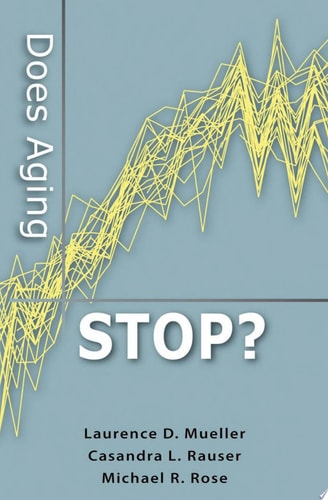
Does Aging Stop? reveals the most paradoxical finding of recent aging research: the cessation of demographic aging. The authors show that aging stops at the level of the individual organism, and explain why evolution allows this. The implications of this counter-intuitive conclusion are profound, and aging research now needs to accept three uncomfortable truths. First, aging is not a cumulative physiological process. Second, the fundamental theory that is required to explain, manipulate, and probe the phenomena of aging comes from evolutionary biology. Third, strong-inference experimental strategies for aging must be founded in evolutionary research, not cell or molecular biology. The result of fifteen years of research bringing together new applications of evolutionary theory, new models for demography, and massive experimentation, Does Aging Stop? advances an entirely new foundation for the scientific study of aging.
Menrva's Summary
THE THESIS
Does aging stop? investigates the paradoxical phenomenon of the cessation of demographic aging in individual organisms. The authors, Casandra L. Rauser, Laurence D. Mueller, and Michael R. Rose, utilize their extensive backgrounds in evolutionary biology to challenge traditional views on senescence. They argue that aging is not a cumulative physiological process and propose that evolutionary theory must serve as the primary framework for future research, rather than focusing solely on cell or molecular biology.
THE SCOPE MAP
What You Will Find
- Demographic models of aging cessation
- Evolutionary biology frameworks for understanding senescence
- Strong-inference experimental strategies
- Analysis of fifteen years of empirical research
Scope Limits
- Does not provide clinical medical advice for human longevity
- Does not focus on molecular or cellular mechanisms of aging
THE AUTHORITY PERSPECTIVE
Experts in the field recognize this work as a significant challenge to conventional gerontological paradigms. Readers frequently note the technical density of the prose, which requires a foundational understanding of evolutionary theory to fully grasp the authors' arguments.
Page Count:
224
Publication Date:
2011-01-01
Publisher:
Oxford University Press
ISBN-10:
0190454105
ISBN-13:
9780190454104
Science
Non-Fiction
Biology
Gerontology
Geriatrics
Allied Health
Medical
Evolution
Evolutionary Biology
Community Tags
Other Editions(3)

Similar Books