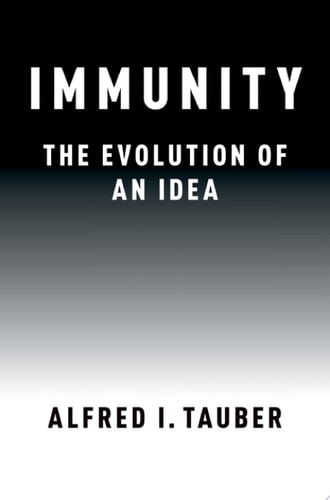
Immunity
0
0
As an Amazon Associate and affiliate partner, Menrva Books earns from qualifying purchases. Learn more
Author Description
Modern Immunology Traditionally Conceives Of The Immune System As Providing Defense Against Pathogens. Alfred I. Tauber Criticizes This Conception Of Immunity As Too Narrow, Because It Discounts Much Of The Immune System's Other Normal Functions. These Include Active Tolerance Of Nutritional Exchanges With The Environment And The Stabilization Of Cooperative Relationships With Resident Micro-organisms. An Expanded Account Extends Immunity's Functional Role From Singular 'defense' To Broadened Discernment Of Environmental 'exchange.' This Ecological Perspective Has Profound Theoretical Implications, For The Basic Notion Of Immune Identity Is Reconfigured: Highlighting The Organism As A Holobiont (a Consortium Of Diverse Organisms Living In Cooperative Relationships) Challenges Prevailing Concepts Of Individuality And The Self/nonself Dichotomy Heretofore Organizing Immune Theory. Indeed, If Theoretical Interest Is Focused On The Challenges Of Maintaining Immune Balance In The Full Ecological Context Of The Organism, Then Immune Regulation Assumes New Complexity. Tauber Maintains That The Key To Unravelling That Puzzle Requires A Critical Re-assessment Of The Cognitive Processes That Underlie Immune Effector Functions. Accordingly, He Provides The Outline Of A Re-formulated 'cognitive Paradigm' That Dispenses With Agent-based Models And Adopts An Ecologically Conceived Understanding Of Perception And Information Processing. The Implications Of This Revised Configuration Of Immunity And Its Deconstructed Notions Of Individuality And Selfhood Have Wide Significance For Philosophers And Life Scientists Working In Immunology, Ecology, And The Cognitive Sciences.
Menrva's Summary
THE THESIS
This book investigates whether the traditional conception of the immune system as a defensive mechanism is insufficient to explain its broader biological functions. Alfred I. Tauber, a philosopher and historian of science, challenges the prevailing self/nonself dichotomy in immunology. He argues that the immune system should be understood through an ecological lens, where the organism functions as a holobiont that manages complex environmental exchanges rather than merely acting as a barrier against pathogens.
THE SCOPE MAP
What You Will Find
- A critique of the classical defense-oriented model of immunity
- An ecological framework defining the organism as a holobiont
- A proposal for a cognitive paradigm of immune regulation
- Analysis of the philosophical implications for individuality and selfhood
Scope Limits
- The text does not provide a clinical manual for medical practitioners
- It avoids detailed molecular biology protocols in favor of theoretical synthesis
THE AUTHORITY PERSPECTIVE
Experts recognize this work as a significant contribution to the philosophy of biology, particularly for its attempt to bridge immunology and cognitive science. Readers frequently note the academic density of the prose, which requires a strong background in both biological theory and philosophical discourse to fully grasp the proposed paradigm shift.
Page Count:
304
Publication Date:
2017-01-01
Publisher:
Oxford University Press
ISBN-10:
0190651253
ISBN-13:
9780190651251
Science
Biology
Ecology
Immunology
Philosophy of
Community Tags
Similar Books