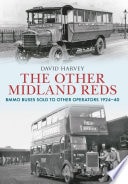
The Other Midland Reds: BMMO Buses Sold to Other Operators 1924-1940
0
0
As an Amazon Associate and affiliate partner, Menrva Books earns from qualifying purchases. Learn more
Author Description
The Birmingham & Midland Motor Omnibus Company began to operate motor buses in the Birmingham and Black Country area in 1912, radiating their services out as far as Leicester. By the 1920s they were building their own buses and SOS was born, standing for 'Shire's Own Specification', named after Midland Red's Chief Engineer. The advantage of this was that the company could design exactly what it wanted without having to compromise by adopting a vehicle from an outside manufacturer. These new single deckers, inspired by American designs, were responsible for the closure of many tramways. An important by-product of this decision to manufacture their own buses was that the company could manufacture for other BET Group operators such as the Northern General group, Potteries Motor Traction and Trent Motor Traction. For these and others, the company built many SOS buses, the fleets being seen all over England and Wales. David Harvey tells the story of the SOS buses, of which five have survived into preservation.
Menrva's Summary
THE THESIS
The Birmingham & Midland Motor Omnibus Company (BMMO) developed its own bus manufacturing capability, leading to the creation of the SOS brand, which not only served its own expanding network but also supplied vehicles to other operators within the BET Group. The company's decision to build its own buses, inspired by American designs, allowed for precise customization and contributed to the closure of tramways. This internal manufacturing also enabled BMMO to produce vehicles for sister companies like Northern General, Potteries Motor Traction, and Trent Motor Traction, with these SOS buses becoming a common sight across England and Wales. The book details the history of these manufactured buses and notes that five examples have been preserved.
THE SCOPE MAP
- The origins and development of the Birmingham & Midland Motor Omnibus Company (BMMO) and its SOS bus manufacturing.
- Details on the design inspiration, including American influences on single-decker buses.
- The role of SOS buses in the closure of tramways.
- Specific examples of other BET Group operators that received SOS buses, such as Northern General, Potteries Motor Traction, and Trent Motor Traction.
- The geographical spread of SOS buses across England and Wales.
- Information on the five surviving SOS buses in preservation.
THE AUTHORITY PERSPECTIVE
This book appears to be a detailed historical account focusing on a specific aspect of public transportation manufacturing. The subject matter suggests a deep dive into the engineering and business decisions behind the SOS buses and their distribution to various operators. The inclusion of preserved vehicles indicates a focus on the tangible legacy of this manufacturing effort. The narrative likely appeals to transport historians, bus enthusiasts, and those interested in the industrial history of the West Midlands.
Page Count:
160
Publication Date:
2012-10-15
Publisher:
Amberley Publishing Limited
ISBN-10:
1445613417
ISBN-13:
9781445613413
Non-Fiction
History
engineering history
Transportation History
Business History
Automotive History
Community Tags
Similar Books