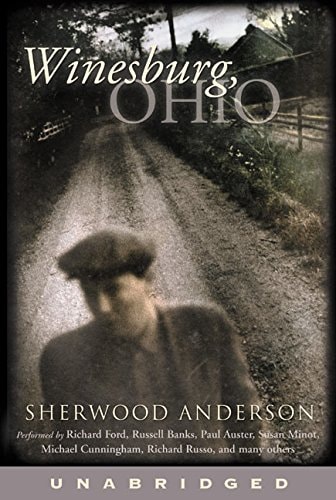
Winesburg, Ohio
0
0
As an Amazon Associate and affiliate partner, Menrva Books earns from qualifying purchases. Learn more
Author Description
Winesburg, Ohio is Sherwood Anderson's masterpiece, a cycle of short stories concerning life in a small Ohio town at the end of the nineteenth century. At the centre is George Willard, a young reporter who becomes the confidant of the town's 'grotesques'--solitary figures unable to communicate with others. George is their conduit for expression and solace from loneliness, but he has his own longings which eventually draw him away from home to seek a career in the city. He carries with him the dreams and unuttered words of remarkable characters such as Wing Biddlebaum, the disgraced former teacher, and the story-telling Doctor Parcival.
Menrva's Summary
THE PULSE
A young reporter serves as the silent witness to the isolated lives of residents in a small Midwestern town. George Willard, an aspiring journalist, navigates his role as a confidant to the various inhabitants of Winesburg, Ohio. These individuals, whom the author identifies as 'grotesques,' struggle with internal barriers that prevent them from forming meaningful connections with others. As George listens to their confessions and unuttered desires, he simultaneously grapples with his own ambition to leave the confines of his hometown for a life in the city. The narrative framework functions as a cycle of interconnected stories, utilizing a third-person perspective to examine the psychological landscape of the town.
INSIDE THE PAGES
- Interconnected short story cycle structure
- Focus on psychological isolation and alienation
- Use of the 'grotesque' as a character archetype
- Exploration of the transition from rural to urban life
- Minimalist prose style
- Emphasis on internal monologue over external action
- Setting as a catalyst for character development
- Recurring motif of unexpressed communication
THE COLLECTIVE ECHO
Readers and critics frequently highlight the work's influence on the development of American modernism and the short story form. Discussion often centers on the author's ability to capture the quiet desperation of small-town life without relying on traditional plot-driven structures. Many observers note that the character studies provide a nuanced look at the human condition, specifically regarding the difficulty of authentic connection. The pacing is described as deliberate and atmospheric, favoring character introspection over rapid narrative progression. This collection remains a frequent point of reference for those interested in the evolution of twentieth-century American prose.
Page Count:
8
Publication Date:
2002-06-18
Publisher:
Caedmon
ISBN-10:
0060010258
ISBN-13:
9780060010256
Art
Fiction
Classics
Modernism
Psychological
Short Stories
Classic Literature
Small Town
Community Tags
Other Editions(12)

Independently Published
2021
Default edition
West Margin Press
2020

CreateSpace Independent Publishing Platform
2018

Palabrero Press
2016
CreateSpace Independent Publishing Platform
2013

Dover Publications, Incorporated
2012
Oxford University Press
2008
ICON Classics
2005
Caedmon
2002

Random House Digital Inc.
2000
Oxford University Press
1997

Tandem Library
1995
Similar Books
Reader Comments
Share Your Thoughts
No comments yet. Be the first to share your thoughts!