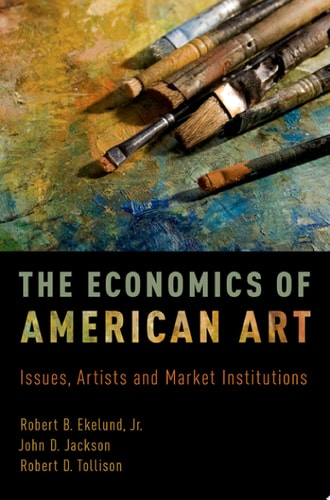
The Economics of American Art: Issues, Artists and Market Institutions
0
0
As an Amazon Associate and affiliate partner, Menrva Books earns from qualifying purchases. Learn more
Author Description
The rapidly changing and evolving art market might appear to be chaotic to the casual observer, with new highs, potential lows, and tastes and fashions changing season to season. Economists, however, view the actions of buyers and sellers as constituting an identifiable market. They have, for some decades, studied such issues as artistic productivity and "death effects" on prices, investment returns, and on the basis of the behavior and estimated prices in auction markets. The Economics of American Art analyzes the most pervasive economic issues facing the art world, applied to the whole spectrum of American art. The book begins by looking at how a market for American art developed, how the politics of the post-war era shaped, at least in large part, the direction of American art, and how this legacy continues into contemporary art today. The book then tackles several salient, integral questions animating the American art world: Are age and "type" of artist (i.e. traditional or "innovative") related and, if so, how might they be related to productivity? Is investment in American art a remunerative endeavor compared to other investment possibilities? Do economic insights provide understanding of fakes, fraud and theft of art, particularly American art, and is it possible to prevent art crime? Is there is a boom (or a bust) in the market for contemporary American art as might be found in other markets? The ongoing evolution of American art is attended by a massive number of influences, and the economic concepts employed in this volume will complement other critical and important cultural studies of art. Both practical and accessible, The Economics of American Art will be essential for collectors, auction houses, American art experts of all kinds, museums, gallery owners and, not least, by economists with continuing scholarly interests in these matters.
Menrva's Summary
THE THESIS
This book investigates whether the mechanisms of supply, demand, and institutional behavior can explain the seemingly chaotic fluctuations and valuation patterns within the American art market. The authors, all established economists, utilize quantitative analysis and historical data to bridge the gap between cultural appreciation and market reality. They argue that economic principles provide a robust framework for understanding artistic productivity, investment returns, and the prevalence of illicit activities like fraud and theft.
THE SCOPE MAP
What You Will Find
- Historical development of the American art market from the post-war era to the present.
- Economic analysis of artist productivity related to age and stylistic innovation.
- Comparative investment performance of art versus traditional financial assets.
- Methodologies for analyzing auction market behavior and market cycles.
Scope Limits
- The text does not provide a comprehensive aesthetic history of American art movements.
- It does not offer specific investment advice for individual collectors or financial planning services.
THE AUTHORITY PERSPECTIVE
Experts recognize this work as a significant contribution to the field of cultural economics, providing a structured approach to a traditionally subjective subject. Readers frequently note the academic density of the prose, which is tailored toward scholars and professionals within the art and economic sectors.
Page Count:
384
Publication Date:
2017-01-01
Publisher:
Oxford University Press
ISBN-10:
019065791X
ISBN-13:
9780190657918
Non-Fiction
Business
Economics
Art History
Investment
Business-to-business
Humanities
Special Topics
Community Tags
Similar Books









Reader Comments
Share Your Thoughts
No comments yet. Be the first to share your thoughts!