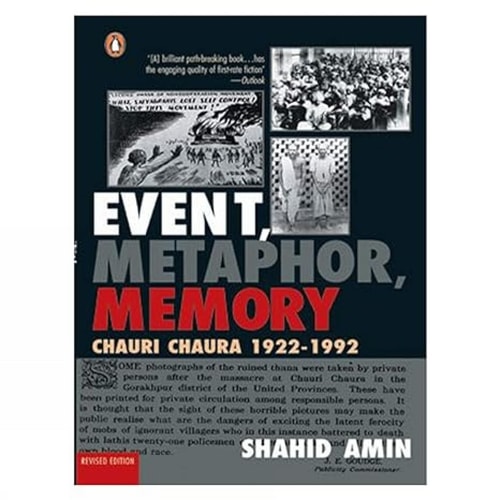
Event, Metaphor, Memory: Chauri Chaura 1922-1992
0
0
As an Amazon Associate and affiliate partner, Menrva Books earns from qualifying purchases. Learn more
Author Description
Winner Of The Ananda Kentish Coomaraswamy Book Prize 1997 An Account Of The Momentous Event In Modern Indian History Which Made Mahatma Gandhi Suspend The Non-Cooperation Movement On 4 February 1922, Peasant Volunteers Who Had Enlisted In Gandhi'S Newly Launched People'S Struggle Against British Rule Turned Violent And Burned Down A Police Station In Chauri Chaura' Killing Twenty-Three Policemen. According To Shahid Amin, This Dramatic Occurrence Simply Had To Be Quickly Forgotten As A Stain Upon The Clean Sheets Of Gandhian Non-Violence. And So It Was. Chauri Chaura' Was Effectively Blotted Out Of The Grand Narrative Of Indian Heroic Nationalism, Making A Token Appearance In Authoritative' Textbooks. In Contrast With This, In Event, Metaphor, Memory Amin Reveals The Fascinating Specificities That Comprise The History Of Chauri Chaura'. By Combining Archival Records With Local Memory To Amplify Voices Of Individual Peasants, He Analyses The Way Events And Memories Are Given Meanings And Emphases, And How Records Are Appropriated By Different, Sometimes Conflicting, Histories. The Result Is A Book That Breaks New Ground In Several Areas Of Indian Historiography.
Menrva's Summary
THE THESIS
The Chauri Chaura incident of 1922, a violent peasant uprising that led Mahatma Gandhi to suspend the Non-Cooperation Movement, was largely erased from the official narrative of Indian nationalism. Shahid Amin's work investigates how this pivotal event, where peasant volunteers burned down a police station killing twenty-three officers, was deliberately forgotten as a stain on the ideal of Gandhian non-violence. By meticulously combining archival records with the oral histories and memories of individual peasants, Amin reconstructs the event and analyzes how its meaning has been shaped and appropriated by conflicting historical accounts. This approach reveals the complex interplay between historical occurrences and the subjective memories that give them meaning.
THE SCOPE MAP
- Analysis of the Chauri Chaura incident of February 4, 1922, and its immediate aftermath.
- Examination of Mahatma Gandhi's decision to suspend the Non-Cooperation Movement.
- Exploration of how the event was officially suppressed and marginalized in national historical narratives.
- Integration of archival documents with local peasant memories and oral histories.
- Analysis of the construction of meaning around historical events and collective memory.
- Discussion of the appropriation of historical records by competing historical accounts.
- Contribution to the field of Indian historiography through innovative methodology.
THE AUTHORITY PERSPECTIVE
This book is recognized for its significant contribution to Indian historiography, having won the Ananda Kentish Coomaraswamy Book Prize in 1997. Amin's method of combining archival research with local memory to amplify the voices of individual peasants is noted as a groundbreaking approach. The work is praised for its detailed analysis of how events and memories are imbued with meaning and how different historical narratives can conflict and appropriate records. It offers a nuanced perspective on the Chauri Chaura incident, moving beyond the dominant nationalistic accounts.
Page Count:
294
Publication Date:
2006-07-01
Publisher:
Penguin Group
ISBN-10:
0143062042
ISBN-13:
9780143062042
History
Non-Fiction
Historiography
Social History
Indian History
Community Tags
Similar Books