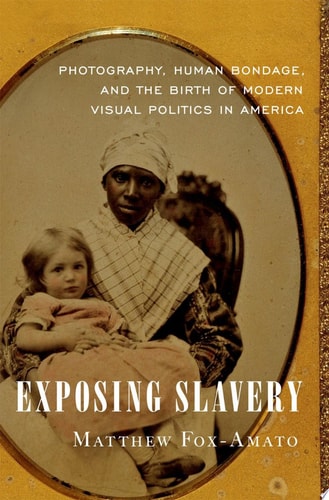
Exposing Slavery
0
0
As an Amazon Associate and affiliate partner, Menrva Books earns from qualifying purchases. Learn more
Author Description
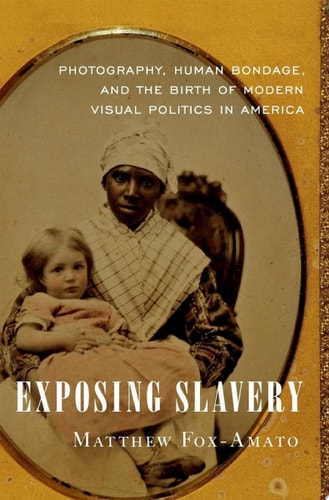
Within A Few Years Of The Introduction Of Photography Into The United States In 1839, Slaveholders Had Already Begun Commissioning Photographic Portraits Of Their Slaves. Ex-slaves-turned-abolitionists Such As Frederick Douglass Had Come To See How Sitting For A Portrait Could Help Them Project Humanity And Dignity Amidst Northern Racism. In The First Decade Of The Medium, Enslaved People Had Begun Entering Southern Daguerreotype Studios Of Their Own Volition, Posing For Cameras, And Leaving With Visual Treasures They Could Keep In Their Pockets. And, As The Civil War Raged, Union Soldiers Would Orchestrate Pictures With Fugitive Slaves That Envisioned Racial Hierarchy As Slavery Fell. In These Ways And Others, Photography Powerfully Influenced How Bondage And Freedom Were Documented, Imagined, And Contested. This Book Explores How Photography Altered And Was, In Turn, Shaped By Conflicts Over Human Bondage. Drawing On An Original Source Base That Includes Hundreds Of Unpublished And Little-studied Photographs Of Slaves, Ex-slaves, Free African Americans, And Abolitionists As Well As Written Archival Materials, It Puts Visual Culture At The Center Of Understanding The Experience Of Late Slavery. It Assesses How Photography Helped Southerners To Defend Slavery, Enslaved People To Shape Their Social Ties, Abolitionists To Strengthen Their Movement, And Soldiers To Pictorially Enact Interracial Society During The Civil War. With Diverse Goals, These Peoples Transformed Photography From A Scientific Curiosity Into A Political Tool. While This Project Sheds New Light On Conflicts Over Late American Slavery, It Also Reveals A Key Moment In The Much Broader Historical Relationship Between Modern Visual Culture And Racialized Forms Of Power And Resistance -- Provided By Publisher.
Menrva's Summary
THE THESIS
This book investigates how the emergence of photography in the mid-19th century fundamentally altered the documentation, perception, and political contestation of American slavery. Matthew Fox-Amato, a historian, utilizes a vast collection of previously unpublished and under-studied daguerreotypes and archival documents to argue that photography was not merely a passive record of the era, but an active tool used by slaveholders, abolitionists, and enslaved people to shape social and political realities. By centering visual culture, the author demonstrates how the medium evolved from a scientific curiosity into a potent instrument of power and resistance during the decline of slavery.
THE SCOPE MAP
What You Will Find
- Analysis of early American daguerreotype culture and its intersection with the institution of slavery.
- Examination of how enslaved individuals utilized portraiture to assert humanity and maintain social ties.
- Investigation of the role of photography in the abolitionist movement and Civil War-era racial politics.
- A primary source base consisting of hundreds of rare, unpublished photographs and written archival materials.
Scope Limits
- The study focuses primarily on the United States during the mid-19th century, specifically the decades surrounding the Civil War.
- It does not provide a comprehensive history of global photography or technical developments in the medium outside of their social and political applications.
THE AUTHORITY PERSPECTIVE
Scholars and historians recognize this work as a significant contribution to the study of visual culture and the history of American slavery. Readers frequently note the depth of the archival research and the author's ability to connect individual photographic artifacts to broader socio-political shifts.
Page Count:
0
Publication Date:
2019-01-01
Publisher:
New York, Ny : Oxford University Press, [2019]
ISBN-10:
0190663936
ISBN-13:
9780190663940
History
Photography
Photography
Social Aspects
American History
Slaves
Slavery
Portraits
Visual Culture
Social History
Community Tags
Similar Books