Author Description
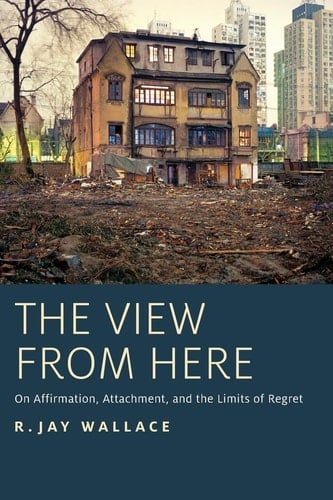
Must we always later regret actions that were wrong for us to perform at the time? Can there ever be good reason to affirm things in the past that we know were unfortunate? In this original work of moral philosophy, R. Jay Wallace shows that the standpoint from which we look back on our lives is shaped by our present attachments-to persons, to the projects that imbue our lives with meaning, and to life itself. Through a distinctive "affirmation dynamic", these attachments commit us to affirming the necessary conditions of their objects. The result is that we are sometimes unable to regret events and circumstances that were originally unjustified or otherwise somehow objectionable.Wallace traces these themes through a range of examples. A teenage girl makes an ill-advised decision to conceive a child - but her love for the child once it has been born makes it impossible for her to regret that earlier decision. The painter Paul Gauguin abandons his family to pursue his true artistic calling (and eventual life project) in Tahiti--which means he cannot truly regret his abdication of familial responsibility. The View from Here offers new interpretations of these classic cases, challenging their treatment by Bernard Williams and others. Another example is the "bourgeois predicament": we are committed to affirming the regrettable social inequalities that make possible the expensive activities that give our lives meaning. Generalizing from such situations, Wallace defends the view that our attachments inevitably commit us to affirming historical conditions that we cannot regard as worthy of being affirmed--a modest form of nihilism.
Menrva's Summary
THE THESIS
This work investigates whether individuals can or should regret past actions that were objectively wrong if those actions were necessary conditions for the existence of current, meaningful attachments. R. Jay Wallace, a professor of philosophy, utilizes a framework of moral psychology to examine how present-day commitments to people and projects influence our retrospective evaluation of history. He argues that our deepest attachments create an 'affirmation dynamic' that complicates our ability to maintain a consistent moral stance toward the past.
THE SCOPE MAP
What You Will Find
- The 'affirmation dynamic' framework regarding personal attachments and historical conditions
- Analysis of the 'bourgeois predicament' concerning social inequality and personal meaning
- Re-evaluations of classic philosophical case studies, including the Gauguin example
- A defense of a modest form of nihilism regarding historical regret
Scope Limits
- The text does not provide a comprehensive guide to overcoming regret or psychological healing
- It does not offer a political solution to the social inequalities discussed
THE AUTHORITY PERSPECTIVE
Experts recognize this text as a significant contribution to contemporary moral philosophy, particularly regarding the intersection of agency and retrospective judgment. Readers frequently note the academic density of the prose, which requires a strong background in philosophical discourse to fully grasp the nuances of the argument.
Page Count:
288
Publication Date:
2017-01-01
Publisher:
Oxford University Press
ISBN-10:
0190660759
ISBN-13:
9780190660758
Philosophy
Non-Fiction
Psychology
Life
Ethics
Life change events
Regret
Moral Philosophy
Values
Community Tags
Similar Books