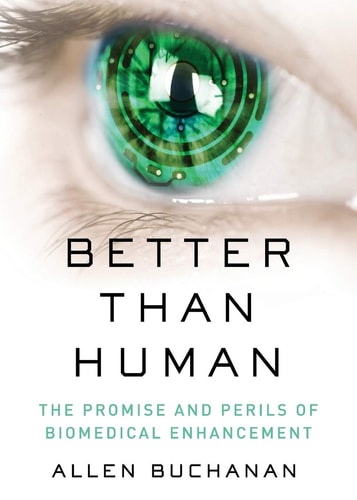
Better than Human: The Promise and Perils of Biomedical Enhancement
0
0
As an Amazon Associate and affiliate partner, Menrva Books earns from qualifying purchases. Learn more
Author Description
In Better than Human?, noted bioethicist Allen Buchanan grapples with the ethical dilemmas of the medical revolution now upon us. Biomedical enhancements, he writes, can make us smarter, have better memories, be stronger, quicker, have more stamina, live much longer, be more resistant to disease and to the frailties of aging, and enjoy richer emotional lives. They can even improve our character, or at least strengthen our powers of self-control. In spite of the benefits that biomedical enhancements may bring, many people instinctively reject them. Some worry that we will lose something important-our appreciation for what we have or what makes human beings distinctively valuable. To think clearly about enhancement, Buchanan argues, we have to acknowledge that nature is a mixed bag and that our species has many "design flaws". We should be open to the possibility of becoming better than human, while never underestimating the risk that our attempts to improve may backfire.
Menrva's Summary
THE THESIS
Allen Buchanan investigates whether the pursuit of biomedical enhancement is ethically defensible despite widespread societal apprehension regarding the alteration of human nature. Drawing on his background as a prominent bioethicist, Buchanan evaluates the potential for technological interventions to improve cognitive, physical, and emotional capacities. He challenges the assumption that natural human traits are inherently superior, arguing instead that our species possesses significant design flaws that warrant correction. The book provides a structured framework for weighing the benefits of self-improvement against the risks of unintended consequences.
THE SCOPE MAP
What You Will Find
- Analysis of cognitive, physical, and emotional enhancement technologies
- Ethical arguments regarding the concept of human nature and design flaws
- Risk assessment models for biomedical intervention
Scope Limits
- Does not provide a technical manual for specific medical procedures
- Does not focus on the political legislation of biotechnology
THE AUTHORITY PERSPECTIVE
Experts recognize this work as a significant contribution to the field of bioethics, noting its balanced approach to a polarizing topic. Readers frequently observe that the prose is accessible to non-specialists while maintaining the rigorous logical structure expected in academic philosophy.
Page Count:
216
Publication Date:
2017-08-01
Publisher:
Oxford University Press
ISBN-10:
0190664045
ISBN-13:
9780190664046
Philosophy
Science and Technology
Biomedical Engineering
Ethics
Bioethics
Community Tags
Similar Books