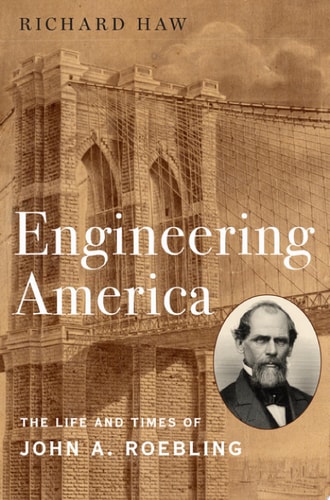
Engineering America: The Life and Times of John A. Roebling
0
0
As an Amazon Associate and affiliate partner, Menrva Books earns from qualifying purchases. Learn more
Author Description
John Roebling was one of the nineteenth century's most brilliant engineers, ingenious inventors, successful manufacturers, and fascinating personalities. Raised in a German backwater amid the war-torn chaos of the Napoleonic Wars, he immigrated to the US in 1831, where he became wealthy and acclaimed, eventually receiving a carte-blanche contract to build one of the nineteenth century's most stupendous and daring works of engineering: a gigantic suspension bridge to span the East River between New York and Brooklyn. In between, he thought, wrote, and worked tirelessly. He dug canals and surveyed railroads; he planned communities and founded new industries. Horace Greeley called him "a model immigrant"; generations later, F. Scott Fitzgerald worked on a script for the movie version of his life. Like his finest creations, Roebling was held together by the delicate balance of countervailing forces. On the surface, his life was exemplary and his accomplishments legion. As an immigrant and employer, he was respected throughout the world. As an engineer, his works profoundly altered the physical landscape of America. He was a voracious reader, a fervent abolitionist, and an engaged social commentator. His understanding of the natural world, however, bordered on the occult and his opinions about medicine are best described as medieval. For a man of science and great self-certainty, he was also remarkably quick to seize on a whole host of fads and foolish trends. Yet Roebling held these strands together. Throughout his life, he believed in the moral application of science and technology, that bridges--along with other great works of connection, the Atlantic Cable, the Transcontinental Railroad--could help bring people together, erase divisions, and heal wounds. Like Walt Whitman, Roebling was deeply committed to the creation of a more perfect union, forged from the raw materials of the continent. John Roebling was a complex, deeply divided yet undoubtedly influential figure
Menrva's Summary
THE THESIS
How did John A. Roebling reconcile his role as a pioneering engineer of the American landscape with his complex, often contradictory personal beliefs and social philosophies? Richard Haw examines the life of the nineteenth-century engineer, drawing upon historical records to analyze his transition from a German immigrant to a central figure in American infrastructure. The book argues that Roebling's professional success in bridge building and industrial innovation was inextricably linked to his idiosyncratic worldview, which blended scientific rigor with unconventional social and medical theories. Haw utilizes primary source documents and historical context to present a portrait of a man whose work aimed to physically unify a divided nation.
THE SCOPE MAP
What You Will Find
- Detailed account of Roebling's immigration and early career in the United States
- Analysis of his major engineering projects, including canal development and the Brooklyn Bridge
- Exploration of his personal writings, abolitionist views, and interest in fringe medical theories
- Contextualization of his work within the broader nineteenth-century American industrial expansion
Scope Limits
- The text does not provide a comprehensive technical manual for his engineering designs
- It does not focus on the post-mortem legacy of his family members beyond their immediate connection to his work
THE AUTHORITY PERSPECTIVE
Historians and critics note the depth of research Haw provides in connecting Roebling's personal eccentricities to his professional output. The text is widely regarded as a thorough examination of a complex historical figure, balancing technical achievement with the social history of the era.
Page Count:
642
Publication Date:
2020-01-01
Publisher:
Oxford University Press
ISBN-10:
0190663928
ISBN-13:
9780190663926
Biography
History
United States
German Americans
Bridges
Engineering
American History
Earth Sciences
English
Biography Autobiography
19th Century
History of the Americas
Germany biography
Technology
English & College Success
Community Tags
Other Editions(2)

Similar Books






Reader Comments
Share Your Thoughts
No comments yet. Be the first to share your thoughts!