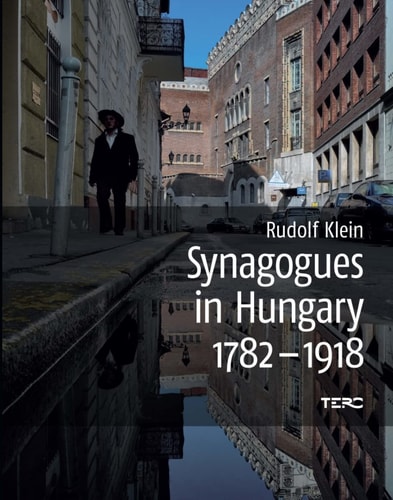
Synagogues in Hungary 1782-1918
0
0
As an Amazon Associate and affiliate partner, Menrva Books earns from qualifying purchases. Learn more
Author Description
"Synagogues in Hungary 1782-1918" is the first comprehensive study that systematically covers all synagogues in Hungary from the Edict of Tolerance by Joseph II to the end of the First World War. Unlike prior attempts, dealing with Post-World-War-Two Hungary only, the geographical range of this study includes historic Hungary, today Austro-Hungarian successor states, within the mentioned chronological timespan. The study presents Hungarian architecture of synagogues in a chronological order; the author gives special attention to the boom of synagogue architecture and art from 1867 to 1918, a time also called "the modern Jewish Renaissance". However, the greatest contribution of this book is the innovative matrix method, which the author applies to determine the basic types of synagogues by using eight basic criteria. The book also deals with the problem of urban context, the position of the synagogue in the city and its immediate environment. There are two detailed case studies how communities built their synagogues and how were these received by the general public. The book ends with a theoretical summary that tries to determine the role of post-emancipation period synagogues in general architectural history.
Menrva's Summary
THE THESIS
This book offers the first comprehensive study of synagogues in Hungary between 1782 and 1918. It systematically covers all synagogues within historic Hungary, extending to its Austro-Hungarian successor states during this period, unlike previous works focused only on post-World War Two Hungary. The study meticulously presents Hungarian synagogue architecture chronologically, with particular emphasis on the architectural and artistic boom from 1867 to 1918, a period known as the 'modern Jewish Renaissance'. A significant contribution is the author's innovative matrix method, which classifies synagogue types using eight basic criteria, while also exploring the urban context and the synagogue's place within the city.
THE SCOPE MAP
- Comprehensive coverage of synagogues in historic Hungary (1782-1918).
- Analysis of synagogue architecture across Austro-Hungarian successor states.
- Detailed examination of the 'modern Jewish Renaissance' in synagogue architecture (1867-1918).
- Innovative matrix method for classifying synagogue types based on eight criteria.
- Exploration of the urban context and the synagogue's relationship with its environment.
- Two detailed case studies on community synagogue construction and public reception.
- Theoretical summary on the role of post-emancipation synagogues in general architectural history.
THE AUTHORITY PERSPECTIVE
The book is recognized for its groundbreaking scope, being the first comprehensive study of Hungarian synagogues within the specified historical period and geographical range. Its innovative matrix method for classifying synagogue types is highlighted as a major contribution to the field. The detailed case studies and analysis of the 'modern Jewish Renaissance' offer significant insights into architectural and cultural history. The work is positioned as a crucial resource for understanding the architectural heritage of synagogues in Central Europe.
Page Count:
800
Publication Date:
2017-05-01
Publisher:
Terc Press
ISBN-10:
6155445087
ISBN-13:
9786155445088
Architecture
Non-Fiction
History
Jewish Studies
Community Tags
Similar Books