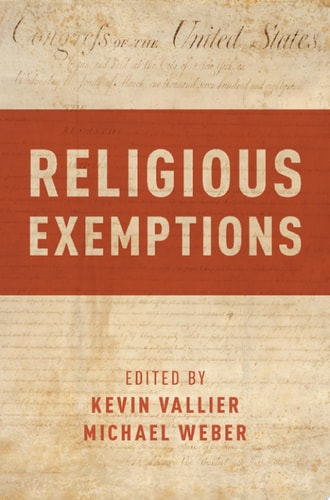
Religious Exemptions
0
0
As an Amazon Associate and affiliate partner, Menrva Books earns from qualifying purchases. Learn more
Author Description
Exemptions from legal requirements, especially religious exemptions, have been a major topic of political debate in recent years. For example, bakers in various states have sought the right to refuse to make wedding cakes for gay and lesbian couples, despite the Supreme Court's validation of same-sex marriage. Many parents are granted exemptions from vaccinating their children, despite public health laws requiring otherwise. Various religious organizations as well as some corporations have sought an exemption from the requirement to provide contraceptive coverage in employee healthcare plans, as required by the Affordable Care Act (ACA). Religious exemptions have a long history in the United States, but they remain controversial. Exemptions release some people from following laws that everyone else must follow, raising questions of fairness, and exemptions often privilege religious belief, raising concerns about equal treatment. At the same time there are good reasons to support exemptions, such as respect for the right of religious freedom and preventing religious organizations from becoming too closely intertwined with government.The essays in this volume represent valuable contributions to the complex debate about exemptions from legal requirements. In particular, they contribute to the moral dimensions of religious exemptions. These essays go beyond legal analysis about which exemptions are constitutionally appropriate, and ask instead when religious exemptions are morally required or morally prohibited.
Menrva's Summary
THE THESIS
This volume investigates the moral legitimacy and ethical boundaries of granting religious exemptions from generally applicable legal requirements. The authors, Michael Weber and Kevin Vallier, curate a collection of essays that shift the focus from constitutional jurisprudence to normative ethics. By examining specific cases such as vaccine mandates, contraceptive coverage, and service refusals, the text evaluates when religious exemptions are morally obligatory versus when they are prohibited by broader societal interests.
THE SCOPE MAP
What You Will Find
- Analysis of high-profile legal conflicts including the Affordable Care Act mandates and public health requirements.
- Ethical frameworks for balancing individual religious freedom against state-mandated equality.
- Philosophical arguments regarding the fairness of privileging religious belief in a secular legal system.
Scope Limits
- The text does not provide a comprehensive legal guide or a definitive constitutional manual for litigation.
- It does not cover international religious exemption laws outside of the United States context.
THE AUTHORITY PERSPECTIVE
Scholars and students of political philosophy frequently cite this collection as a balanced resource for navigating the intersection of moral theory and public policy. Experts highlight the text for its ability to move beyond standard legal analysis to address the underlying ethical tensions inherent in pluralistic societies.
Page Count:
324
Publication Date:
2018-01-12
Publisher:
Oxford University Press
ISBN-10:
0190666188
ISBN-13:
9780190666187
Religion
Religion
Sociology
Ethics
Law
Religious tolerance
Freedom of religion
Public Policy
Church & State
Community Tags
Similar Books