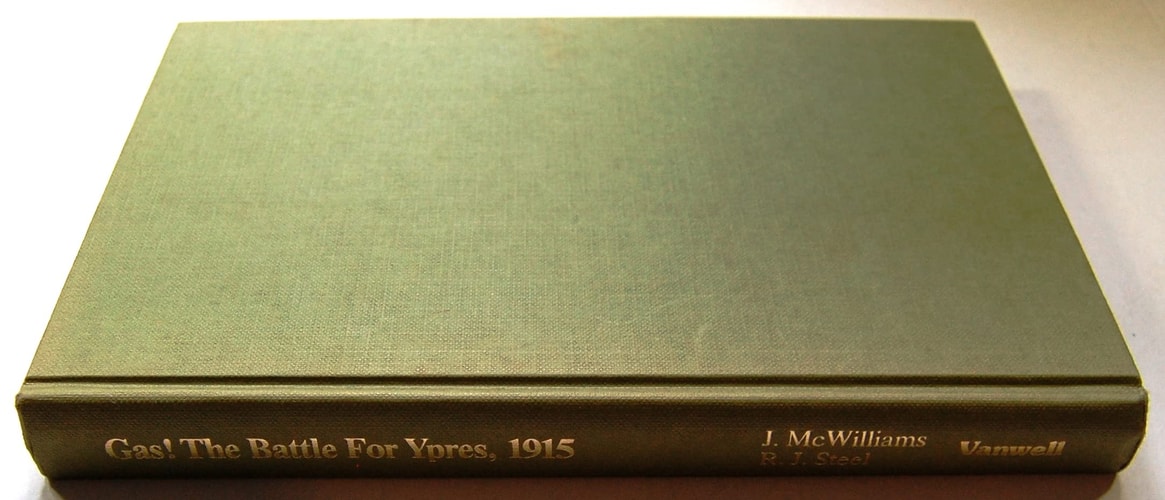
Gas! The Battle for Ypres, 1915
0
0
As an Amazon Associate and affiliate partner, Menrva Books earns from qualifying purchases. Learn more
Author Description
A fascinating World War One history that charts the first use of chemical weapons in modern warfare. Perfect for readers of Max Hastings, Martin Middlebrook and Tim Cook. By 1915, the Western Front had descended into deadlock. Near the town of Ypres soldiers from Canada, Britain, India, France, Belgium, the French Colonies and Germany sat in long winding trenches facing each other. German commanders sought to break through the Allied lines by using a new chlorine gas. At five o’clock on 22nd April 1915 German troops opened the valves on their deadly steel cylinders and chemical warfare entered the First World War. As the thick, yellow-green cloud of smoke was carried by the wind into Allied trenches it overcame all those who breathed in its poisonous vapours. By the end of the Second Battle of Ypres thousands of men had been killed and even more were injured as a result of gas. J. McWilliams and R. J. Steel uncover this horrifying battle from beginning to end and explore what it was like the for the French Algerians who first witnessed the gas clouds approaching them, how the Canadians stubbornly refused to retreat in the face of gas, what the British and Indians hoped to achieve with their tragic counterattacks, and ultimately why the German offensive failed. Gas! The Battle for Ypres, 1915 discusses the course of the battle not just from the perspective of generals, but also draws information from the accounts of field commanders and men who were there in the trenches witnessing these terrifying events first-hand.
Menrva's Summary
THE THESIS
of this book is to meticulously detail the first large-scale use of chemical weapons in modern warfare during the Battle of Ypres in 1915.** The authors, J. McWilliams and R. J. Steel, explore this pivotal moment in World War I by examining the events leading up to the gas attack, the immediate aftermath, and the strategic implications. They draw upon accounts from various nationalities involved, including French Algerians, Canadians, British, and Indian soldiers, to provide a multi-faceted perspective on the battle. The book aims to understand not only the tactical execution of the gas attack but also the reasons behind the ultimate failure of the German offensive, offering insights from both high command and the soldiers on the ground.
THE SCOPE MAP
- Detailed account of the first use of chlorine gas as a weapon in World War I.
- Analysis of the Second Battle of Ypres and its impact on the Western Front.
- Perspectives from various nationalities involved: French Algerians, Canadians, British, and Indian soldiers.
- Examination of the battle from the viewpoints of generals, field commanders, and trench soldiers.
- Exploration of the strategic failures and successes of the German offensive.
- Discussion of the human cost of chemical warfare, including casualties and injuries.
THE AUTHORITY PERSPECTIVE
The book is presented as a fascinating historical account of a significant event in World War I, focusing on the introduction of chemical weapons. It is recommended for readers who enjoy the works of historians like Max Hastings, Martin Middlebrook, and Tim Cook, suggesting a readership interested in detailed, narrative-driven military history. The authors' approach of incorporating perspectives from various levels of command and different nationalities indicates a comprehensive and humanizing portrayal of the battle. The focus on firsthand accounts suggests an effort to convey the visceral experience of soldiers facing unprecedented horrors.
Page Count:
247
Publication Date:
1985-01-01
Publisher:
Janes Information Group
ISBN-10:
0920277012
ISBN-13:
9780920277010
History
Non-Fiction
Military History
Community Tags
Similar Books