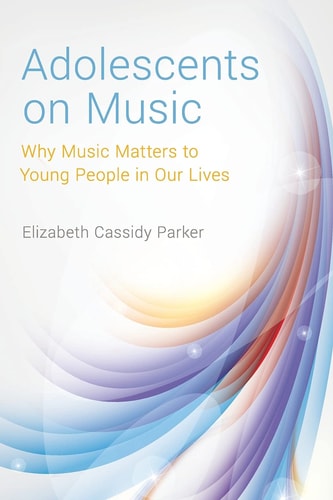
Adolescents on Music
0
0
As an Amazon Associate and affiliate partner, Menrva Books earns from qualifying purchases. Learn more
Author Description
Many can attest to the importance of the self-growth that occurs for young people through the arts and their accompanying communities of support, understanding, and caring. Yet even professionals who work daily with adolescents, and parents or guardians who raise adolescents, sometimes have difficulty collectively articulating why musicking experiences are important for young people. In Adolescents on Music, author Elizabeth Cassidy Parker proves that this challenge stems from failing to ask adolescents to share their ideas richly and fully. Accordingly, Parker argues for deeper efforts to connect adolescent perspectives with established theories and philosophies in the social sciences and humanities.Organized into three sections--Who I Am; My Social Self; and Toward a Future Vision--Parker seeks new and diverse perspectives from the young people sharing their voices and experiences in each chapter. Chapters begin with a description from adolescents, in their own words, of the music they make, the meanings they ascribe to their music-making, and contributions to their development. The voices highlighted in these chapters come from adolescent solo musicians, autonomous and vernacular players, composers, school and community music-makers, and listeners between the ages of 12-20. By familiarizing readers with the multiplicity of adolescent music-making experiences and perspectives; discussing relevant theories within and outside of music and music education that support adolescent musical and personal growth; promoting adolescent health and well-being and greater understanding of young people; and providing a common language toward advocacy for adolescent music-making, Adolescents on Music serves as an invaluable resource for individual and group music teachers and practitioners, parents of adolescents, music mentors, and music education students.
Menrva's Summary
THE THESIS
This book investigates the critical importance of music-making in adolescent development by centering the lived experiences and perspectives of young people themselves. Author Elizabeth Cassidy Parker, a scholar in music education, argues that adults often struggle to articulate the value of musical engagement because they fail to consult the adolescents involved. By synthesizing qualitative data from young musicians with established theories in the social sciences and humanities, Parker provides a framework for understanding how music contributes to personal growth, social identity, and overall well-being.
THE SCOPE MAP
What You Will Find
- Qualitative accounts from adolescents aged 12-20 regarding their musical practices and meanings.
- A three-part organizational structure: Who I Am, My Social Self, and Toward a Future Vision.
- Theoretical applications connecting music education to broader social science and humanities research.
Scope Limits
- The text focuses primarily on the developmental and social aspects of music-making rather than technical music theory or performance instruction.
THE AUTHORITY PERSPECTIVE
Practitioners and educators identify this work as a significant contribution to the field of music education for its emphasis on student-centered advocacy. Experts highlight the text as a practical resource for mentors and parents seeking to bridge the communication gap between adult expectations and adolescent musical reality.
Page Count:
276
Publication Date:
2020-02-18
Publisher:
Oxford University Press
ISBN-10:
019067136X
ISBN-13:
9780190671365
Music Education
Music
Pedagogy
Humanities
Musicians
Sociology
Community Tags
Other Editions(3)
Similar Books



Reader Comments
Share Your Thoughts
No comments yet. Be the first to share your thoughts!