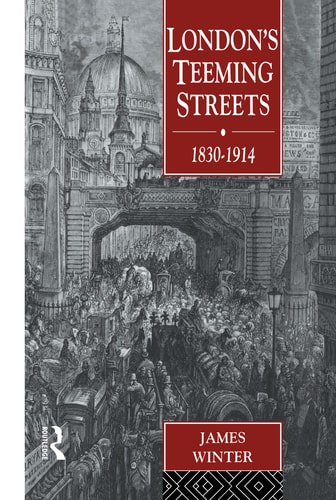
London's Teeming Streets 1830-1914
0
0
As an Amazon Associate and affiliate partner, Menrva Books earns from qualifying purchases. Learn more
Author Description
The streets of Victorian London became increasingly congested with vehicles, fast and furious drivers, pedestrians, costermongers, prostitutes, brass bands, homeless children and other obstacles to safe and rapid motion. Concerned citizens were alarmed by this unprecedented build-up of traffic and pollution. But how did this chaotic state come about - and why was more not done to prevent it? London's Teeming Streets brings an historical perspective to present-day concerns about the effects of continued urban expansion and shows that many current problems date back to the Victorian era. James Winter reveals that the issue of street reform was fraught with political intrigue. Many reformers were liberals; yet the question of attempting to limit or prohibit activity on the King's Highway which was, by definition, an open and democratic preserve, brought the very purpose of liberal reform into sharp focus.
Menrva's Summary
THE THESIS
This book investigates the causes and consequences of the unprecedented traffic congestion and pollution in Victorian London. James H. Winter examines the chaotic state of London's streets between 1830 and 1914, a period marked by an influx of vehicles, fast drivers, pedestrians, and various street dwellers. The book explores the concerns of citizens alarmed by this build-up and delves into the political intrigue surrounding street reform efforts, highlighting how the debate over limiting highway use challenged liberal principles. It connects these historical issues to contemporary concerns about urban expansion and its effects.
THE SCOPE MAP
- Analysis of traffic congestion in London from 1830 to 1914.
- Exploration of the social impact of street congestion, including the presence of various social groups.
- Examination of pollution and its effects on urban life during the Victorian era.
- Discussion of the political landscape and debates surrounding street reform.
- Investigation into the challenges faced by reformers attempting to regulate public highways.
- Connection of Victorian urban issues to modern-day concerns about urban expansion.
THE AUTHORITY PERSPECTIVE
The book offers a historical perspective on urban traffic and pollution, drawing parallels to contemporary issues. It highlights the political complexities and ideological debates that characterized Victorian street reform efforts. The work is framed as an examination of how historical urban challenges echo in modern city planning and governance. It suggests that understanding the Victorian era's struggles with congestion and reform provides valuable context for current urban development.
Page Count:
263
Publication Date:
1993-01-01
Publisher:
Psychology Press
ISBN-10:
0415035902
ISBN-13:
9780415035903
History
Non-Fiction
Social History
Victorian Era
Urban History
Community Tags
Similar Books