Nietzsche and the Ancient Skeptical Tradition
0
0
As an Amazon Associate and affiliate partner, Menrva Books earns from qualifying purchases. Learn more
Author Description
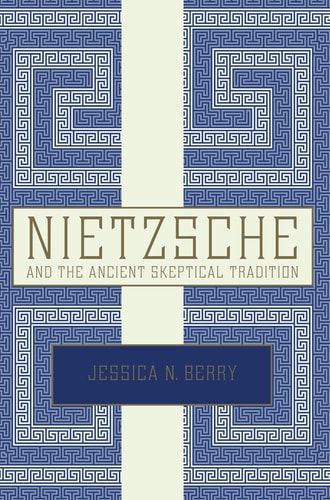
The impact of Nietzsche's engagement with the Greek skeptics has never before been systematically explored in a book-length work - an inattention that belies the interpretive weight scholars otherwise attribute to his early career as a professor of classical philology and to the fascination with Greek literature and culture that persisted throughout his productive academic life. Jessica N. Berry fills this gap in the literature on Nietzsche by demonstrating how an understanding of the Pyrrhonian skeptical tradition illuminates Nietzsche's own reflections on truth, knowledge, and ultimately, the nature and value of philosophic inquiry. This entirely new reading of Nietzsche's epistemological and ethical views promises to make clear and render coherent his provocative but often opaque remarks on the topics of truth and knowledge and to grant us further insight into his ethics-since the Greek skeptics, like Nietzsche, take up the position they do as a means of promoting well-being and psychological health. In addition, it allows us to recover a portrait of Nietzsche as a philologist and philosophical psychologist that has been too often obscured by commentaries on his thought.
Menrva's Summary
THE THESIS
This book investigates the extent to which Friedrich Nietzsche’s philosophical framework, particularly his views on truth and knowledge, is derived from the ancient Pyrrhonian skeptical tradition. Jessica N. Berry, a scholar of classical philosophy, utilizes Nietzsche’s background in classical philology to argue that his engagement with Greek skepticism is central to his epistemological and ethical projects. By situating Nietzsche within this historical lineage, the author provides a coherent interpretation of his often-opaque remarks on the nature of inquiry and psychological well-being.
THE SCOPE MAP
What You Will Find
- A systematic analysis of Nietzsche’s early career as a classical philologist.
- A comparative framework linking Nietzschean perspectivism to Pyrrhonian skepticism.
- An examination of the connection between skeptical inquiry and psychological health.
Scope Limits
- The text does not provide a comprehensive biography of Nietzsche’s entire life.
- It does not cover the influence of post-Kantian German Idealism on Nietzsche’s later works.
THE AUTHORITY PERSPECTIVE
Scholars recognize this work as a significant contribution to Nietzsche studies, particularly for its focus on his philological roots. Experts highlight the text as a rigorous academic examination that successfully bridges the gap between ancient skepticism and modern continental philosophy.
Page Count:
248
Publication Date:
2017-01-01
Publisher:
Oxford University Press
ISBN-10:
0190670045
ISBN-13:
9780190670047
Philosophy
Ethics
Skepticism
Epistemology
Philosophy history
Community Tags
Similar Books