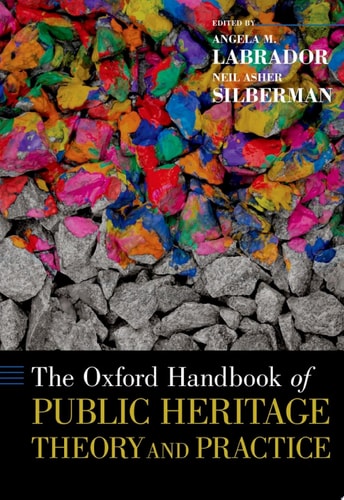
The Oxford Handbook Of Public Heritage Theory And Practice
0
0
As an Amazon Associate and affiliate partner, Menrva Books earns from qualifying purchases. Learn more
Author Description
The Field Of Cultural Heritage Is No Longer Solely Dependent On The Expertise Of Art And Architectural Historians, Archaeologists, Conservators, Curators, And Site And Museum Administrators. It Has Dramatically Expanded Across Disciplinary Boundaries And Social Contexts, With Even The Basic Definition Of What Constitutes Cultural Heritage Being Widened Far Beyond The Traditional Categories Of Architecture, Artifacts, Archives, And Art. Heritage Now Includes Vernacular Architecture, Intangible Cultural Practices, Knowledge, And Language, Performances And Rituals, As Well As Cultural Landscapes. Heritage Has Also Become Increasingly Entangled With The Broader Social, Political, And Economic Contexts In Which Heritage Is Created, Managed, Transmitted, Protected, Or Even Destroyed. Heritage Protection Now Encompasses A Growing Set Of Methodological Approaches Whose Objectives Are Not Necessarily Focused Upon The Maintenance Of Material Fabric, Which Has Traditionally Been Cultural Heritage's Primary Concern. The Oxford Handbook Of Public Heritage Theory And Practice Charts Some Of The Major Sites Of Convergence Between The Humanities And The Social Sciences, Where New Disciplinary Perspectives Are Being Brought To Bear On Heritage. These Convergences Have The Potential To Provide The Interdisciplinary Expertise Needed Not Only To Critique But Also To Achieve The Intertwined Intellectual, Political, And Socioeconomic Goals Of Cultural Heritage In The Twenty-first Century. This Volume Highlights The Potential Contributions Of Development Studies, Political Science, Anthropology, Management Studies, Human Geography, Ecology, Psychology, Sociology, Cognitive Studies, And Education To Heritage Studies.
Menrva's Summary
THE THESIS
This volume investigates the evolving definition of cultural heritage and the interdisciplinary methodologies required to manage, protect, and interpret it in the twenty-first century. Editors Angela M. Labrador and Neil Asher Silberman curate a collection of essays that bridge the gap between traditional preservation and contemporary social, political, and economic contexts. The text argues that heritage studies must integrate perspectives from diverse fields such as development studies, human geography, and cognitive science to address the complexities of intangible practices and cultural landscapes.
THE SCOPE MAP
What You Will Find
- Analysis of the shift from material-focused preservation to intangible cultural practices and rituals.
- Theoretical frameworks integrating political science, management studies, and ecology into heritage management.
- Case studies demonstrating the intersection of humanities and social sciences in public heritage projects.
Scope Limits
- The text does not provide a technical manual for the physical conservation of specific artifacts or architectural materials.
- It does not focus on the history of art or architecture in isolation from its broader social and political implications.
THE AUTHORITY PERSPECTIVE
Experts recognize this volume as a comprehensive reference for scholars and practitioners navigating the expanded field of heritage studies. Readers frequently note the academic density of the prose, which serves as a foundational text for those seeking to understand the interdisciplinary nature of modern cultural management.
Page Count:
752
Publication Date:
2018-01-01
Publisher:
Oxford University Press
ISBN-10:
0190676612
ISBN-13:
9780190676612
Humanities
Sociology
Public History
Museum Studies
Anthropology