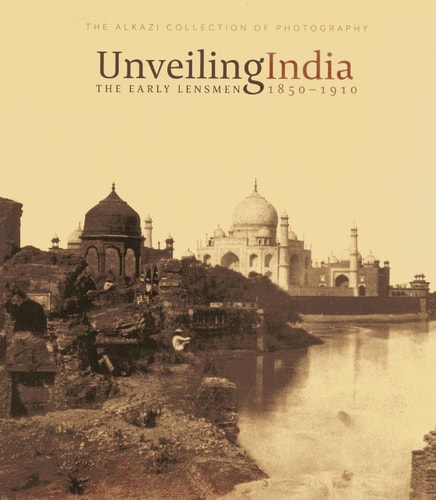
Unveiling India: The Early Lensmen, 1850-1910
0
0
As an Amazon Associate and affiliate partner, Menrva Books earns from qualifying purchases. Learn more
Author Description
Photography was introduced in India in 1840, soon after being patented in Europe in 1839. The pioneers of photography in India were employees of the English East India Company, whose chief functionaries understood that this could be an efficient tool for documenting geographical and topographical information, previously rendered through drawings and watercolours. Subsequently, the 'pioneers' of Indian photography, those inveterate western practitioners followed prescribed routes, conventional grids, and pictorial schemata in which the visualisation was constructed by a cultural mapping and a political programme; often fostered by cultural patrons. To be presented at the Royal Museums of Fine Arts, Belgium, the exhibition "Unveiling India: The Early Lens Men (1850-1910)" shines a light on pioneering photography in India through a selection of photos and negatives never before exhibited in Europe. Produced in conjunction with the exhibition, this volume offers a unique glimpse of the magnificent collection of 19th and early 20th century photographs from the Alkazi Foundation. Looking at the rare collection of the Wax Paper Negatives by Dr John Murray and Alexander Greenlaw, the images not only provide an insight into the early processes of picture making, but the visitor also journeys through time with the development of landscape photography. The works of Nicholas & Co, Samuel Bourne, Raja Deen Dayal & Sons etc. showcase the early commercial studios of the three presidencies of Colonial India -- Calcutta, Bombay and Madras.
Menrva's Summary
THE THESIS
The book investigates the introduction and early development of photography in India from 1850 to 1910. It examines how photography, introduced shortly after its European patent, was initially adopted by the English East India Company as a tool for documentation, and how subsequent Western practitioners established conventional approaches influenced by cultural and political agendas. The volume showcases a rare collection from the Alkazi Foundation, including previously unexhibited works, offering insights into early photographic processes and the evolution of landscape photography.
THE SCOPE MAP
- Early photographic processes, including Wax Paper Negatives by Dr. John Murray and Alexander Greenlaw.
- The development of landscape photography in India.
- Works from early commercial studios like Nicholas & Co., Samuel Bourne, and Raja Deen Dayal & Sons.
- Photographs and negatives from the Alkazi Foundation's collection, many never before exhibited in Europe.
- Documentation of geographical and topographical information through early photography.
- The influence of cultural mapping and political programs on early Indian photography.
THE AUTHORITY PERSPECTIVE
This volume, produced in conjunction with an exhibition at the Royal Museums of Fine Arts, Belgium, offers a unique glimpse into a magnificent collection of 19th and early 20th-century photographs. The Alkazi Foundation's rare collection, including works by pioneers like Dr. John Murray, Alexander Greenlaw, Nicholas & Co., Samuel Bourne, and Raja Deen Dayal & Sons, provides significant historical and artistic insights. The book is noted for showcasing previously unexhibited photos and negatives in Europe, detailing early photographic processes and the evolution of landscape photography. It highlights the initial adoption of photography by the East India Company and the subsequent development of commercial studios across colonial India.
Page Count:
104
Publication Date:
2014-01-01
Publisher:
Mapin Publishing
ISBN-10:
1935677403
ISBN-13:
9781935677406
Photography
History
Non-Fiction
India
Art History
Community Tags
Similar Books














