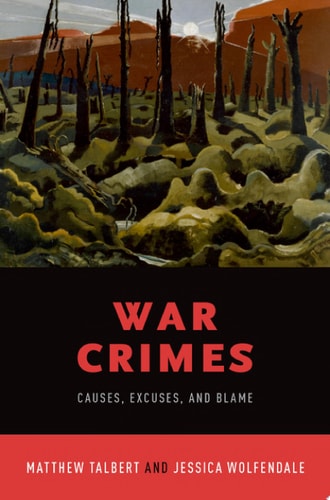
War Crimes: Causes, Excuses, and Blame
0
0
As an Amazon Associate and affiliate partner, Menrva Books earns from qualifying purchases. Learn more
Author Description
In 2005, US Marines killed 24 unarmed Iraqi civilians in the town of Haditha, including several children. How should we assess the perpetrators of this and other war crimes? Is it unfair to blame the Marines because they were subject to situational pressures such as combat stress (and had lost one of their own in combat)? Or should they be held responsible for their actions, since they intentionally chose to kill civilians? In this book, Matthew Talbert and Jessica Wolfendale take up these moral questions and propose an original theory of the causes of war crimes and the responsibility of war crimes perpetrators. In the first half of the book, they challenge accounts that explain war crimes by reference to the situational pressures endured by military personnel, including peer pressure, combat stress, and propaganda. The authors propose an alternative theory that explains how military personnel make sense of their participation in war crimes through their self-conceptions, goals, and values. In the second half of the book, the authors consider and reject theories of responsibility that excuse perpetrators on the grounds that situational pressures often encourage them to believe that their behavior is permissible. Such theories of responsibility are unacceptably exculpatory, implying it is unreasonable for victims of war crimes to blame their attackers. By contrast, Talbert and Wolfendale argue that perpetrators of war crimes may be blameworthy if their actions express objectionable attitudes towards their victims, even if they sincerely believe that what they are doing is right.
Menrva's Summary
THE THESIS
This book investigates the moral responsibility of military personnel who commit war crimes, specifically questioning whether situational pressures provide a valid excuse for such actions. Authors Jessica Wolfendale and Matthew Talbert, both scholars in philosophy and ethics, utilize case studies like the Haditha incident to construct a framework for moral accountability. They argue that perpetrators should be held responsible based on their internal self-conceptions and values rather than being excused by external combat stressors or propaganda.
THE SCOPE MAP
What You Will Find
- Analysis of the Haditha incident and similar military atrocities
- A critique of situationalist accounts of war crimes
- A proposed theory of moral responsibility based on agent-centered attitudes
- Examination of the relationship between victim blame and perpetrator accountability
Scope Limits
- The text does not provide a comprehensive legal history of international war crimes tribunals
- The analysis does not focus on the strategic or tactical military failures that lead to combat stress
THE AUTHORITY PERSPECTIVE
Experts in moral philosophy and military ethics recognize this work as a rigorous challenge to traditional situationalist excuses in conflict zones. Readers frequently note the academic density of the prose, which is intended for scholars and students of ethics rather than a general audience.
Page Count:
184
Publication Date:
2018-01-01
Publisher:
Oxford University Press
ISBN-10:
0190675896
ISBN-13:
9780190675899
Philosophy
Professional Career & Trade
Ethics
International Security
Military History
War Crimes
Community Tags
Similar Books