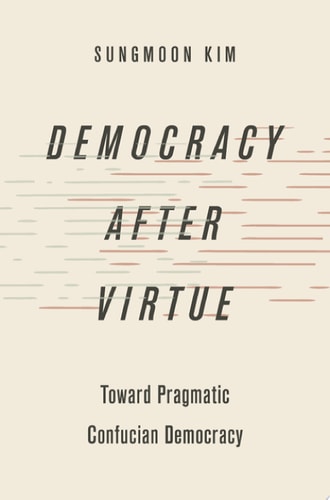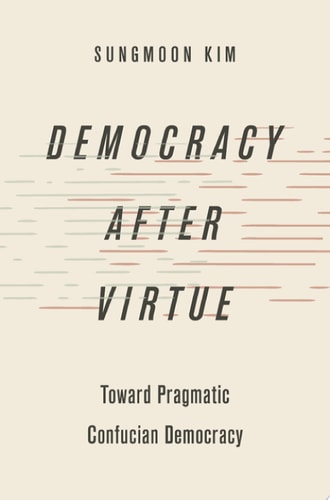
Democracy After Virtue: Toward Pragmatic Confucian Democracy
0
0
As an Amazon Associate and affiliate partner, Menrva Books earns from qualifying purchases. Learn more
Author Description
In the past two decades contemporary Confucian political theory has been propelled by the dialectical conversation between Confucianism and democracy and, more recently, between Confucian democracy and Confucian meritocracy. However, the absence of a shared point of reference in developing Confucian democratic theory has made it extremely difficult to understand whether the disagreement between Confucian democrats and Confucian meritocrats is merely a political one or is also of philosophical significance. 'Democracy after Virtue' explores a normative Confucian democratic theory that justifies democracy on pragmatic grounds, both as a political system and as a way of life in East Asia, with special attention to Confucianism, a dominant cultural tradition in the region, as well as to the value pluralism and moral conflict that increasingly characterize the circumstances of East Asian politics.
Menrva's Summary
THE THESIS
This book investigates whether the tension between Confucian democracy and Confucian meritocracy represents a fundamental philosophical divide or merely a political disagreement. Sungmoon Kim, a scholar of political theory, utilizes a pragmatic framework to argue for a normative Confucian democratic theory. He examines how democratic systems can be justified within the context of East Asian cultural traditions, specifically addressing the challenges posed by value pluralism and moral conflict in modern governance.
THE SCOPE MAP
What You Will Find
- A comparative analysis of Confucian democratic theory and Confucian meritocracy
- A pragmatic justification for democracy as both a political system and a way of life
- Examination of value pluralism within East Asian political contexts
Scope Limits
- The text does not provide a comprehensive history of all Confucian political thought
- It does not offer a universal blueprint for democratic implementation outside of the East Asian cultural sphere
THE AUTHORITY PERSPECTIVE
Scholars in the field of comparative political theory recognize this work as a significant contribution to the ongoing dialogue between traditional Confucian values and modern democratic institutions. Readers frequently note the academic density of the prose, which is intended for an audience familiar with political philosophy and East Asian studies.
Page Count:
0
Publication Date:
1900-01-01
Publisher:
Oxford University Press
ISBN-10:
0190671262
ISBN-13:
9780190671266
Philosophy
Political Theory
Confucianism
Asian Studies
Democracy