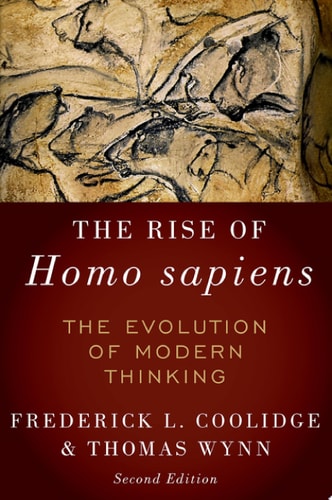
The Rise of Homo Sapiens: The Evolution of Modern Thinking
0
0
As an Amazon Associate and affiliate partner, Menrva Books earns from qualifying purchases. Learn more
Author Description
The Rise of Homo sapiens provides an unrivalled interdisciplinary introduction to the subject of hominin cognitive evolution that is appropriate for general audiences and students in psychology, archaeology, and anthropology.The book includes chapters on neural anatomy, working memory, evolutionary methods, and non-human primate cognition, but the bulk of the text reviews major developments in cognition over the span of hominin evolution from the ape-like cognition of Ardipithecus to the final developments that enabled the modern mind. The most provocative chapters of the first edition - the explicit discussion of the role of sleep in hominin evolution and the difference between Neandertal and modern human cognition - incorporate significant developments in both areas since the publication of the first edition. This revised edition updates the former text and adds greater emphasis to the growing fields of epigenetic inheritance, embodied cognition, and neuroaesthetics. The new edition provides greater emphasis on role and status of Homo heidelbergensis.
Menrva's Summary
THE THESIS
This book investigates the cognitive evolution of hominins, specifically identifying the mechanisms and developmental milestones that enabled the emergence of the modern human mind. Frederick L. Coolidge and Thomas Grant Wynn, both established scholars in psychology and anthropology, synthesize data from neural anatomy, archaeology, and primate studies to construct a framework for understanding how cognitive capacities shifted over millions of years. Their argument centers on the transition from ancestral cognitive states to the complex, symbolic, and social thinking characteristic of Homo sapiens.
THE SCOPE MAP
What You Will Find
- Analysis of hominin cognitive evolution from Ardipithecus to modern humans
- Examination of neural anatomy, working memory, and evolutionary methodology
- Discussion of emerging fields including epigenetic inheritance, embodied cognition, and neuroaesthetics
- Comparative analysis of Neandertal and modern human cognitive capabilities
Scope Limits
- The text focuses primarily on cognitive and evolutionary development rather than detailed cultural or linguistic history
- It does not provide an exhaustive survey of every hominin species, focusing instead on key evolutionary transitions
THE AUTHORITY PERSPECTIVE
Experts and academics recognize this text as a comprehensive, interdisciplinary resource for students and general readers interested in the evolution of human cognition. Readers frequently note the balance between technical scientific detail and accessible prose, making it a standard reference for those studying the intersection of psychology and archaeology.
Page Count:
344
Publication Date:
2018-01-25
Publisher:
Oxford University Press
ISBN-10:
0190680911
ISBN-13:
9780190680916
Science
Archaeology
Evolutionary Psychology
Anthropology
Paleoanthropology
Humanistic psychology
Community Tags
Similar Books