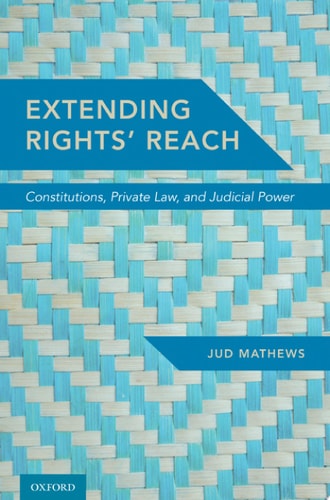
Extending Rights' Reach
0
0
As an Amazon Associate and affiliate partner, Menrva Books earns from qualifying purchases. Learn more
Author Description
Constitutional Rights Protect Individuals Against Government Overreaching, But That Is Not All They Do. In Different Ways And To Different Degrees, Constitutional Rights Also Regulate Legal Relations Among Private Parties In Most Legal Systems. Rights Can Have Not Only A Vertical Effect, Within The Hierarchical Relationship Between Citizen And State, But Also A Horizontal One, On The Citizen-to-citizen Relationships Otherwise Governed By Private Law. In Every Constitutional System With Judicially Enforceable Constitutional Rights, Courts Must Make Choices About Whether, When, And How To Give Those Rights Horizontal Effect. This Book Is About How Different Courts Make Those Choices, And About The Consequences That They Have. The Doctrines That Courts Build To Manage The Horizontal Effect Of Rights Speak To The Most Fundamental Issues That Constitutional Systems Address, About The Nature Of Rights And Of Constitutionalism Itself. These Doctrines Can Also Entrench Or Enhance Judicial Power, But In Very Different Ways Depending On The Legal System. This Book Offers Three Case Studies, Of Germany, The United States, And Canada. For Each, It Offers A Detailed Account Of The Horizontal Effect Jurisprudence Of Its Apex Court-not In Isolation, But As A Central Feature Of A Broader Account Of That Country's Constitutional Development. The Case Studies Show How The Choices Courts Make About Horizontal Rights Reflect Existing Normative And Political Realities And, Over Time, Help To Shape New Ones.
Menrva's Summary
THE THESIS
This book investigates how constitutional systems determine the horizontal effect of rights, specifically examining how courts manage the application of constitutional protections to private legal relationships. Author Jud Mathews, a legal scholar, utilizes a comparative framework to analyze the doctrinal choices made by apex courts in Germany, the United States, and Canada. The work argues that these judicial decisions are not merely technical legal maneuvers but are deeply embedded in the normative and political realities of each nation, ultimately shaping the evolution of constitutionalism.
THE SCOPE MAP
What You Will Find
- Comparative analysis of horizontal rights jurisprudence in Germany, the United States, and Canada.
- Examination of the relationship between constitutional rights and private law.
- Analysis of how judicial doctrines regarding horizontal effect influence the scope of judicial power.
Scope Limits
- The study is limited to the three specific jurisdictions mentioned and does not provide a global survey of all constitutional systems.
- The text focuses primarily on apex court jurisprudence rather than lower court applications or legislative developments.
THE AUTHORITY PERSPECTIVE
Legal scholars and constitutional law experts recognize this work as a significant contribution to the comparative study of rights application. Readers frequently note the academic density of the prose, which is intended for an audience of legal professionals and students of constitutional theory.
Page Count:
248
Publication Date:
2018-01-01
Publisher:
Oxford University Press
ISBN-10:
0190682922
ISBN-13:
9780190682927
Jurisprudence
Comparative Law
Constitutional Law
Law
Community Tags
Other Editions(2)

Similar Books