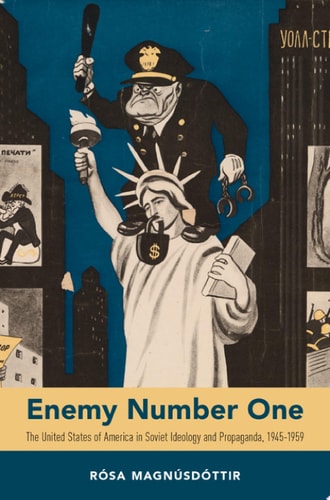
Enemy Number One
0
0
As an Amazon Associate and affiliate partner, Menrva Books earns from qualifying purchases. Learn more
Author Description
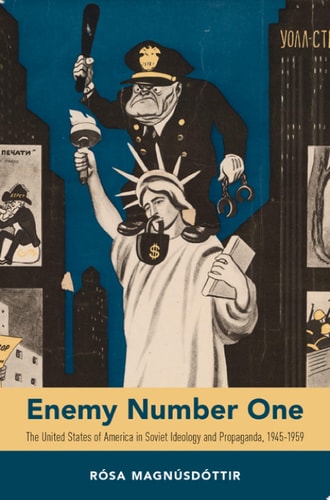
Enemy Number One Tells The Story Of The Soviet Cultural And Propaganda Apparatus And Its Efforts To Control Information About The United States In The Postwar Landscape. Beginning With The 1945 Meeting Of American And Soviet Troops On The Elbe, This Period Saw Cultural Relations Develop In Close Connection To Oppression As The Soviet Authorities Attempted To Contain And Appropriate Images Of The United States. Rósa Magnúsdóttir Analyzes Two Official Narratives About The Ussr's Enemy Number One --stalin's Anti-american Campaign And Khrushchev's Policy Of Peaceful Coexistence--and Shows How Each Relied On The Legacy Of The Wartime Alliance In Their Approach. Stalin Used The Wartime Experience To Spread Fear Of A Renewed War, While Khrushchev Used The Wartime Alliance As Proof That The Two Superpowers Could Work Together. Drawing From Extensive Archival Resources, Magnúsdóttir Brings To Life The Propaganda Warriors And Ideological Chiefs Of The Early Cold War Period In The Soviet Union, Revealing Their Confusion And Insecurities As They Attempted To Navigate The Uncertain World Of Late Stalin And Early Khrushchev Cultural Bureaucracy. She Also Demonstrates How Concerned Soviet Authorities Were By Their People's Presumed Interest In The United States, Resorting To Monitoring And Even Repression-behavior Indicative Of The Inferiority Complex Of The Soviet Project As It Related To The Outside World.
Menrva's Summary
THE THESIS
This work investigates how the Soviet cultural and propaganda apparatus attempted to manage and manipulate the image of the United States within the USSR during the early Cold War. Rósa Magnúsdóttir, a historian specializing in Soviet cultural politics, utilizes extensive archival research to examine the shift from Stalinist anti-Americanism to Khrushchev's policy of peaceful coexistence. The book argues that these official narratives were deeply rooted in the legacy of the wartime alliance, reflecting the regime's profound insecurities and its persistent need to control public perception of the West.
THE SCOPE MAP
What You Will Find
- Analysis of the transition from Stalinist propaganda to Khrushchev-era diplomacy.
- Examination of the Soviet cultural bureaucracy and its internal decision-making processes.
- Investigation into state-sponsored monitoring and repression of citizens interested in American culture.
Scope Limits
- The study focuses primarily on the early Cold War period, ending before the later stages of the Khrushchev era.
- The analysis is limited to official state narratives and does not provide a comprehensive history of grassroots American influence in the Soviet Union.
THE AUTHORITY PERSPECTIVE
Historians and scholars of Soviet studies frequently cite this work for its detailed use of previously inaccessible archival materials regarding the Soviet propaganda machine. Experts highlight the text as a significant contribution to understanding the psychological and bureaucratic complexities of the early Cold War period.
Page Count:
248
Publication Date:
2018-01-01
Publisher:
Oxford University Press
ISBN-10:
0190681470
ISBN-13:
9780190681470
History
Propaganda
Cold War
Soviet Union
Community Tags
Similar Books