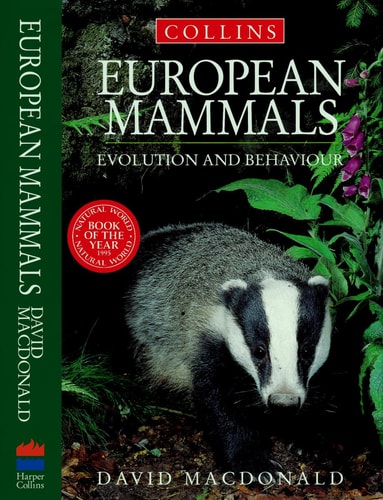
European Mammals: Evolution and Behaviour
0
0
As an Amazon Associate and affiliate partner, Menrva Books earns from qualifying purchases. Learn more
Author Description
The mammals are perhaps the most interesting of all the animals because of the intricacy and flexibility of their behaviour. There is an outstanding diversity in mammalian adaptions to life on land, in the sea and in the air. We have much to learn about and from the mammals. Indeed, when studying them we are looking at our fellow creatures. This book is the story of how and why mammals became the way they are, and why they behave the way they do. Macdonald begins by explaining evolution and adaption: how and why the mammals survived while the dinosaurs did not and how they have become so successful a form of life on earth. Citing many examples he describes feeding, communication and social behaviour.
Menrva's Summary
THE THESIS
This work investigates the evolutionary mechanisms and behavioral adaptations that have allowed mammals to achieve ecological dominance and diversity across varied global environments. David B. Macdonald, a prominent zoologist, synthesizes paleontological history with contemporary ethology to explain the survival strategies of mammalian lineages. The text provides a framework for understanding how physiological traits and social structures evolved in response to environmental pressures, positioning mammals as complex subjects of biological study.
THE SCOPE MAP
What You Will Find
- Evolutionary history of mammalian survival following the extinction of the dinosaurs
- Analysis of diverse adaptive strategies for terrestrial, aquatic, and aerial life
- Examination of complex social behaviors, including communication and feeding patterns
- Comparative biological data illustrating the flexibility of mammalian traits
THE AUTHORITY PERSPECTIVE
The subject matter points to a comprehensive, accessible introduction to mammalogy suitable for students and interested naturalists. The framing suggests a focus on the intersection of evolutionary biology and behavioral science, providing a clear overview of how mammalian life has adapted to the modern world.
Page Count:
352
Publication Date:
1995-07-01
Publisher:
HarperCollins
ISBN-10:
0002199440
ISBN-13:
9780002199445
Science
Mammalogy
Zoology
Evolutionary Biology
Europe
Biology
Community Tags
Similar Books