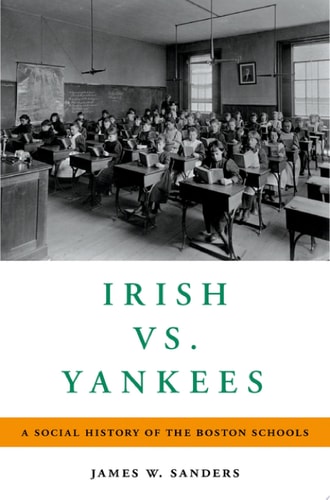
Irish Vs. Yankees
0
0
As an Amazon Associate and affiliate partner, Menrva Books earns from qualifying purchases. Learn more
Author Description
Boston Entered The Twentieth Century As An Irish Catholic City, No Longer The Yankee Town Of Its Puritan Past. The Dominance Of The Irish Catholic Population, Swelled By The Potato Famine Masses, Gave It Political Control Of The City, And Significantly, Control Of Its Public Schools. Unlike In Other American Cities, Boston Catholics Had Little Need For A Large Or Influential Parochial System: They Had The School Committee, School Principals, And The Teachers. In Irish Vs. Yankees, James W. Sanders Takes A New Look At This Critical Period In The Development Of Boston Schools, From 1822, When Boston Officially Became A City, To The Second World War. Framing The Discussion Around The Catholic Hierarchy, He Considers The Interplay Of Social Forces In The Nineteenth And Early Twentieth Centuries That Led To The Political Rise Of The Irish Catholic Over The Native Brahmin And The Way This Development Shaped Boston's Schools. From Bishop John Fitzpatrick To Boston College, Sanders Introduces A Cast Of Colorful Characters And Institutions To This Tale Of The Education And Religion In One Of America's Most Prominent Cities.
Menrva's Summary
THE THESIS
This work investigates how the demographic shift from a Yankee-dominated Puritan society to an Irish Catholic majority fundamentally altered the governance and philosophy of Boston's public school system. James W. Sanders, an academic historian, utilizes archival records and institutional histories to trace the political evolution of the city. He argues that the unique integration of Irish Catholics into the public school apparatus, rather than the creation of a separate parochial system, defined the educational landscape of Boston from 1822 through the Second World War.
THE SCOPE MAP
What You Will Find
- Analysis of the political transition from Brahmin control to Irish Catholic dominance.
- Examination of the Boston School Committee and its role in cultural assimilation.
- Historical profiles of key figures including Bishop John Fitzpatrick and the development of Boston College.
- Documentation of the interplay between religious identity and municipal governance.
Scope Limits
- The study focuses primarily on the Boston metropolitan area and does not provide a comparative analysis of other American cities.
- The narrative concludes at the onset of the Second World War and does not address post-war educational reforms.
THE AUTHORITY PERSPECTIVE
Scholars and historians frequently cite this text as a foundational resource for understanding the intersection of urban politics and religious identity in New England. Readers often note the academic density of the prose, which provides a rigorous examination of institutional power dynamics.
Page Count:
304
Publication Date:
2018-01-01
Publisher:
Oxford University Press
ISBN-10:
0190681586
ISBN-13:
9780190681586
History
Religion
Boston History
Education
American History
Sociology
Community Tags
Similar Books