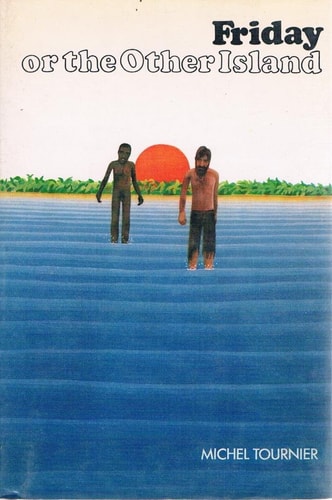
Friday: Or, The Other Island
0
0
As an Amazon Associate and affiliate partner, Menrva Books earns from qualifying purchases. Learn more
Author Description
Robinson Crusoe finds himself stranded on a desolate island, forced to confront the limits of his own civilization and the nature of his humanity. As he attempts to recreate the rigid structures of European society in the wilderness, he encounters Friday, a native inhabitant whose presence challenges Robinson's worldview. The narrative follows their evolving relationship, shifting from master and servant to a complex, symbiotic partnership that redefines the meaning of solitude. Through a series of philosophical reflections and physical trials, the story examines the tension between order and chaos, and the potential for personal transformation in isolation.
Menrva's Summary
THE PULSE
Robinson Crusoe finds himself stranded on a desolate island, forced to confront the limits of his own civilization and the nature of his humanity. As he attempts to recreate the rigid structures of European society in the wilderness, he encounters Friday, a native inhabitant whose presence challenges Robinson's worldview. The narrative follows their evolving relationship, shifting from master and servant to a complex, symbiotic partnership that redefines the meaning of solitude. Through a series of philosophical reflections and physical trials, the story examines the tension between order and chaos, and the potential for personal transformation in isolation.
INSIDE THE PAGES
- Reimagining of the classic Robinson Crusoe mythos
- Philosophical exploration of solitude and civilization
- Non-linear progression of the protagonist's psychological state
- Detailed descriptions of island survival and resource management
- Shift in narrative perspective from colonial imposition to cultural exchange
- Symbolic use of the island environment as a mirror for the self
- Examination of language and communication barriers
- Critique of Western societal norms and hierarchies
THE COLLECTIVE ECHO
This novel is widely recognized as a significant contribution to post-colonial literature and philosophical fiction. Critics often highlight the author's ability to subvert traditional adventure tropes by focusing on the internal evolution of the characters rather than mere survival. The work is frequently studied for its structural complexity and its biting critique of the colonial mindset that defined the original source material. Readers often note the stark contrast between the protagonist's initial rigidity and his eventual liberation from societal constraints. The text remains a staple in academic discussions regarding the deconstruction of canonical narratives.
Page Count:
224
Publication Date:
1969-01-01
Publisher:
Collins
ISBN-10:
000221248X
ISBN-13:
9780002212489
Fiction
Adventure
classic
Post-Colonial
Literature & Fiction
Philosophical
Literary