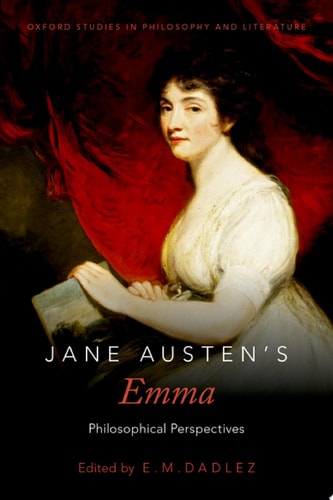
Jane Austen's Emma: Philosophical Perspectives
0
0
As an Amazon Associate and affiliate partner, Menrva Books earns from qualifying purchases. Learn more
Author Description
What has Emma Woodhouse, "handsome, clever, and rich, with a comfortable home and very little to distress or vex her" to say to a discipline like philosophy? How is a novel like Emma, inaccurately but not infrequently caricatured as a high-toned version of a pedestrian romance, to supply material for philosophical insight or speculation?Jane Austen's Emma is many things to many readers but it is as inaccurate as it is reductive to consider it just a romance. The minutia of daily living on which it concentrates permit not a rehearsal of platitudes, but a closer look at human emotions and motives, as well as the opportunity to hone our interpretive and empathetic skills. Emma flies in the face of conventional notions of femininity by presenting a heroine with hubris. It shows how friendships can affect one's ways of dealing with the world, how shame can reconfigure self-understanding, how gossip functions in sustaining a community. Emma rehabilitates conceptions of romance by rejecting melodrama in favor of naturalism. It explores the waywardness of the imagination and the myriad ways in which different people with different biases and agendas may evaluate the same evidence. It dwells on the limits of autonomy in that it explores the ease with which one may submit to the will of another.Emma is not itself a work of philosophy. Rather, it leads us to think philosophically. In this volume, a myriad group of scholars and philosophers explore the philosophical resonances of Emma.
Menrva's Summary
THE THESIS
This volume investigates how Jane Austen's novel Emma serves as a catalyst for philosophical inquiry into human behavior, social dynamics, and moral psychology. Author E. M. Dadlez, a professor of philosophy, curates a collection of essays that move beyond the reductive classification of the novel as mere romance. The work argues that the text provides a rigorous framework for examining complex themes such as hubris, the limits of autonomy, and the epistemological challenges of interpreting social evidence.
THE SCOPE MAP
What You Will Find
- Philosophical analysis of character hubris and moral development
- Examinations of social dynamics including gossip and community influence
- Discussions on the role of imagination and bias in human perception
- Theoretical frameworks regarding autonomy and interpersonal influence
Scope Limits
- The text does not provide a comprehensive biography of Jane Austen
- It does not offer a traditional literary analysis focused on historical context or period-specific aesthetics
THE AUTHORITY PERSPECTIVE
Scholars and students of philosophy frequently cite this collection as a bridge between classic literature and analytic philosophy. Experts highlight the text for its ability to demonstrate how narrative fiction can function as a legitimate source for philosophical speculation.
Page Count:
264
Publication Date:
2018-01-01
Publisher:
Oxford University Press
ISBN-10:
0190689447
ISBN-13:
9780190689445
Philosophy
Literary Criticism
Philosophy of
Academic
English
English & College Success
Classic Literature
Critical Theory
Community Tags
Similar Books