Leaning, Leaning Over Water: A Novel in Ten Stories
0
0
As an Amazon Associate and affiliate partner, Menrva Books earns from qualifying purchases. Learn more
Author Description
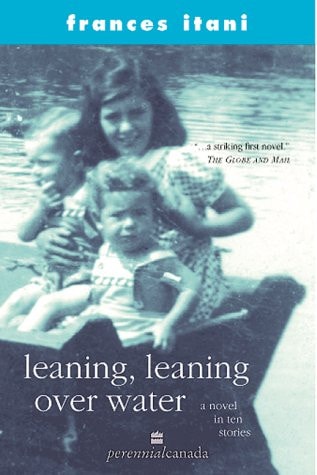
As noted by Quill & Quire, Frances Itani is an award-winning writer. Most recently, she won the Tilden/Saturday Night/CBC Literary Award for two consecutive years; an impressive feat as the stories are submitted to the jurors for evaluation anonymously. Now, Itani expands her control of the short story medium, with her new novel, Leaning, Leaning Over Water, a series of connected short stories. Almost all the narration is by Trude, the middle child of the King family. She has been told that her position in the family makes her the family collector and teller of stories. The stories she recounts crystallize crucial moments during the life of her family, the people around them, and the social climate of pre-Quiet Revolution Quebec. The stories begin after the father has moved his family to a rural area on the Quebec side of the Ottawa River, where he has taken a job painting fleur-de-lis on tin trays in a nearby factory. For the children this means they grow up in delightful wilderness surrounded by people and customs which are completely new, but leaves their English speaking, non-swimming mother in isolation. The family is cut off from much of the world, but there is much of the world around them. They learn of their individuality through the cultural differences they find between themselves and their nearest neighbours, the Roman Catholic family down the way. They learn about sex and despair first hand through the few adults around them. And they are constantly exposed to life and death, and miracles through their constant contact with the river itself. The Ottawa River (the "water" referred to in the title) borders the King family abode and wends its way through every story in the novel -- always rushing past, bringing with it joys and sorrows, its power never to be underestimated, nor taken lightly -- underscoring the frailty of life lived on its banks.
Menrva's Summary
THE PULSE
A young girl named Trude assumes the role of family chronicler as she navigates the complexities of her upbringing in rural Quebec. As the middle child of the King family, Trude observes the shifting dynamics of her household after they relocate to the banks of the Ottawa River. Her objective is to document the pivotal moments that define her family's identity, while facing the isolation of her mother and the cultural friction between her English-speaking family and their French-speaking neighbors. The narrative unfolds through a series of interconnected stories, providing a fragmented yet cohesive look at the family's development against the backdrop of pre-Quiet Revolution Quebec.
INSIDE THE PAGES
- Interconnected short story structure forming a novelistic arc
- First-person narration primarily from the perspective of Trude King
- Exploration of cultural and linguistic isolation in rural settings
- The Ottawa River serving as a recurring symbolic and physical motif
- Examination of the social climate in pre-Quiet Revolution Quebec
- Focus on the transition from childhood to adolescence
- Contrast between English-speaking outsiders and local Roman Catholic neighbors
- Themes of life, death, and the fragility of human existence
THE COLLECTIVE ECHO
This work is characterized by its quiet, observational style and its focus on the internal development of the King family. The narrative structure suggests a deliberate pacing that mirrors the steady, relentless flow of the Ottawa River. Readers likely find the cultural tensions between the English-speaking protagonists and their French-speaking neighbors to be a central point of interest. The prose emphasizes the significance of small, localized events in shaping the broader trajectory of a family's life. The book stands as an exploration of memory and the role of the storyteller within a domestic unit.
Page Count:
206
Publication Date:
1998-01-01
Publisher:
HarperCollins
ISBN-10:
0002255014
ISBN-13:
9780002255011
Literary Fiction
Fiction
Historical Fiction
Fiction sagas
Canadian
Coming of Age
Short Stories
Canada