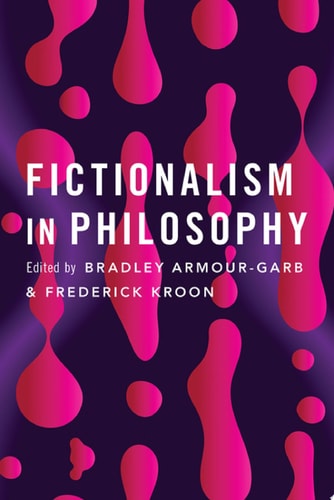
Fictionalism in Philosophy
0
0
As an Amazon Associate and affiliate partner, Menrva Books earns from qualifying purchases. Learn more
Author Description
There are things we routinely say that may strike us as literally false but that we are nonetheless reluctant to give up. This might be something mundane, like the way we talk about the sun setting in the west (it is the earth that moves), or it could be something much deeper, like engaging in talk that is ostensibly about numbers despite believing that numbers do not literally exist. Rather than regard such behaviour as self-defeating, a "fictionalist" is someone who thinks that this kind of discourse is entirely appropriate, even helpful, so long as we treat what is said as a useful fiction, rather than as the sober truth."Fictionalism" can be broadly understood as a view that uses a notion of pretense or fiction in order to resolve certain puzzles or problems that otherwise do not necessarily have anything to do with literature or fictional creations. Within contemporary analytic philosophy, fictionalism has been on the scene for well over a decade and has matured during that time, growing in popularity. There are now myriad competing views about fictionalism and consequently the discussion has branched out into many more subdisciplines of philosophy. Yet there is widespread disagreement on what philosophical fictionalism actually amounts to and about how precisely it ought to be pursued. This volume aims to guide these discussions, collecting some of the most up-to-date work on fictionalism and tracing the view's development over the past decade. After a detailed discussion in the book's introductory chapter of how philosophers should think of fictionalism and its connection to metaontology more generally, the remaining chapters provide readers with arguments for and against this view from leading scholars in the fields of epistemology, ethics, metaphysics, philosophy of science, philosophy of language, and others.
Menrva's Summary
THE THESIS
This volume investigates the philosophical viability and conceptual boundaries of fictionalism as a strategy for resolving discourse-based puzzles. Authors Bradley Armour-Garb and Frederick Kroon curate a collection of essays that examine how treating certain statements as useful fictions—rather than literal truths—allows philosophers to navigate complex ontological and epistemological problems. The text serves as both a historical overview of the development of fictionalism over the last decade and a platform for contemporary debate across multiple philosophical subdisciplines.
THE SCOPE MAP
What You Will Find
- A comprehensive introductory framework connecting fictionalism to metaontology.
- Scholarly arguments addressing the application of fictionalism in ethics, science, and language.
- A synthesis of competing definitions and methodologies within the analytic tradition.
Scope Limits
- The text does not provide a singular, unified definition of fictionalism, as it focuses on the diversity of current scholarly disagreement.
- It does not address literary theory or the aesthetics of fiction, focusing strictly on philosophical discourse.
THE AUTHORITY PERSPECTIVE
Experts identify this volume as a primary resource for understanding the maturation of fictionalism within contemporary analytic philosophy. Readers frequently note the academic density of the prose, which is intended for advanced students and professional philosophers.
Page Count:
256
Publication Date:
2020-01-29
Publisher:
Oxford University Press
ISBN-10:
0190689609
ISBN-13:
9780190689605
Philosophy
Epistemology
Ethics
Metaphysics
Philosophy of
Community Tags
Other Editions(2)
Similar Books






Reader Comments
Share Your Thoughts
No comments yet. Be the first to share your thoughts!