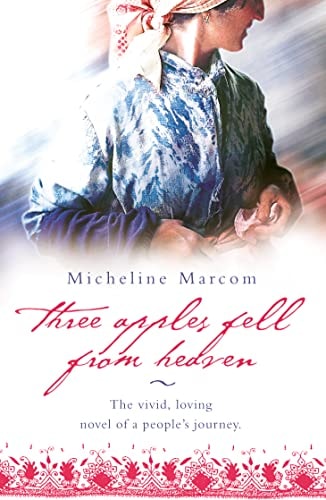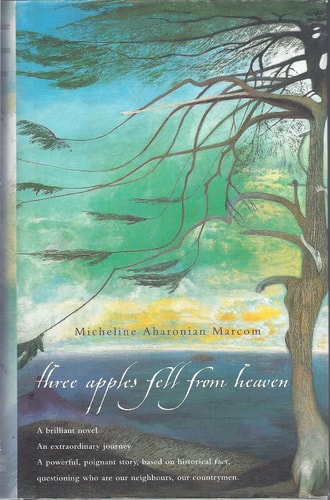
Three Apples from Heaven
0
0
As an Amazon Associate and affiliate partner, Menrva Books earns from qualifying purchases. Learn more
Author Description
A powerfully original, poetically wrought first novel about the disappearance of a village during the Armenian genocide begun in 1915-the debut of a brilliant literary stylist."Spectacularly gifted, tender, wise, and terrible in rage, Micheline Marcom has woven a heart-rending tapestry from the lost time, lost places, and lost voices of the Armenian genocide."-Junot D'azHere is a novel of import and style, set in 1915-1917, the years of the Ottoman Turkish government's campaign of unspeakable brutality that resulted in the deaths of more than a million Armenians. Through a series of chapters that have the weight and economy of poetry, Micheline Aharonian Marcom introduces us to the stories of Anaguil, an Armenian girl taken in by Turkish neighbors after the death of her parents and who now views the remains of her world through a Muslim veil; Sargis, a poet hidden away in his mother's attic, dressed in woman's clothing, and steadily going mad; Lucine, a servant and lover of the American consul, reviled by the villagers for the illusory privilege she enjoys; Maritsa, a rage-filled Muslim wife who leaves her husband while he is at the front and becomes a whore; and Dickran, an infant left behind under a tree on the long exodus from an Armenian village, whose tiny hands reach up to touch the stars, who dies with his name unrecorded. Through these lives, we witness the vanishing of a people.In pages replete with indelible images of beauty and horror, Marcom conjures the steam and the gossip of the hamam, the ghostly fragrance of rose petal preserves, and the metallic chill of fear. Her novel is an elegy to the final days of Orientalism and an elegant memorial to the victims of the twentieth century's first genocide. Together, the stories of these lives form a narrative mosaic-faceted, complex, exquisite in its detail, a devastating tableau.
Menrva's Summary
THE PULSE
The systematic erasure of an Armenian village during the 1915 genocide forces its survivors to navigate a landscape of profound loss and shifting identities. Through a series of interconnected vignettes, the narrative follows characters like Anaguil, a girl assimilated into a Turkish household, and Sargis, a poet sequestered in isolation, as they confront the collapse of their social and cultural world. The prose operates with a poetic economy, capturing the internal psychological disintegration of individuals caught in the machinery of state-sponsored violence. The narrative framework functions as a mosaic, alternating between disparate perspectives to document the vanishing of a community under the weight of historical trauma.
INSIDE THE PAGES
- Non-linear narrative structure composed of interconnected character vignettes
- Lyrical, dense prose style emphasizing sensory details like fragrance and texture
- Multiple perspectives including an assimilated girl, a hidden poet, and a marginalized servant
- Focus on the domestic and psychological impacts of state-sanctioned violence
- Use of symbolic imagery to represent the loss of cultural heritage
- Minimalist dialogue that highlights the isolation of the characters
- Exploration of the intersection between personal identity and political catastrophe
- Atmospheric setting depicting the transition from traditional village life to total erasure
THE COLLECTIVE ECHO
This novel is recognized for its stylistic ambition and its unflinching approach to the historical realities of the Armenian genocide. Critics often highlight the author's ability to balance the weight of historical tragedy with a delicate, poetic prose that avoids conventional melodrama. The fragmented narrative structure is frequently cited as an effective device for conveying the disorientation and loss experienced by the victims of the period. Readers and reviewers alike note the work's somber tone and its focus on the intimate, often overlooked human costs of systemic brutality. The book remains a significant entry in contemporary literature for its commitment to memorializing a specific, devastating historical event through a highly stylized lens.
Page Count:
320
Publication Date:
2001-02-05
Publisher:
HARPERCOLLINS
ISBN-10:
0002261928
ISBN-13:
9780002261920
Literary Fiction
Historical Fiction
War
Genocide
Literature & Fiction
Contemporary
Armenian History