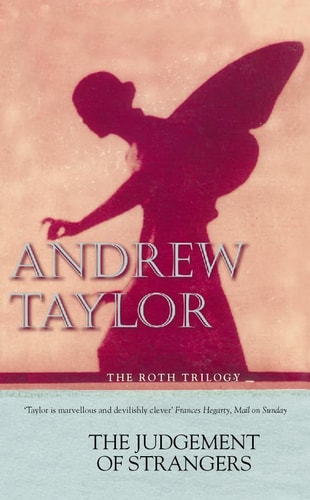
The Judgement of Strangers
0
0
As an Amazon Associate and affiliate partner, Menrva Books earns from qualifying purchases. Learn more
Author Description
The second novel of the trilogy is the story of David Byfield, a widowed parish priest with a dark past and a darker future. Set in 1970 in a commuter village near London, the novel explores the consequences of Byfield's second marriage.Roth is not so much a village as a suburban state of mind. But the past clings and still has the power to affect the present. The menopausal Audrey Oliphant, churchwarden and spinster, nurses a hopeless passion for her parish priest. Lady Youlgreave slides towards death in the company of her equally senile dogs, Beauty and Beast. The big house, now a wreck of its former grandeur, has been sold to a pair of hippies, brother and sister, who have their own secrets and their own power to disturb. The vicar's new wife is fascinated by a Victorian poet-priest with local connections - Francis Youlgreave, author of The Judgement of Strangers, opium addict and suicide. And there are the children at the Vicarage: Michael Appleyard, a watchful boy with a taste for Sherlock Holmes, and Rosemary, Byfield's teenage daughter, as beautiful - and as strange - as an angel.Then the murders begin, and the mutilations, and the echoes of past crimes and blasphemies.
Menrva's Summary
THE PULSE
The arrival of a new wife in a quiet 1970s commuter village triggers a series of violent events that unearth long-buried secrets and local scandals. David Byfield, a widowed parish priest, attempts to navigate his second marriage while his past and the unsettling history of his village converge. The narrative, which unfolds through a multi-perspective lens, examines how the residents of Roth—from the watchful children to the aging aristocracy—are bound by their hidden motives and the influence of a long-dead Victorian poet. As the community faces a string of murders and mutilations, the characters must confront the reality that their suburban isolation is no protection against the consequences of past transgressions.
INSIDE THE PAGES
- Atmospheric setting in a 1970s English commuter village
- Multi-perspective narrative structure
- Exploration of the intersection between past and present crimes
- Integration of historical literary references and local folklore
- Focus on psychological tension and domestic secrets
- Inclusion of a watchful, observant child character
- Themes of religious hypocrisy and social decay
- Pacing that emphasizes slow-burn dread and mounting unease
THE COLLECTIVE ECHO
This novel is characterized by its dense, atmospheric prose and its focus on the psychological undercurrents of a seemingly quiet English village. The narrative structure suggests a deliberate, methodical pacing that prioritizes character development and the slow revelation of secrets over rapid action. Readers likely encounter a story that leans heavily into the gothic tradition, utilizing the setting of a decaying estate and the weight of history to build tension. The work appears to be a study in how past actions continue to exert influence on the present, creating a sense of inevitability that drives the plot toward its conclusion.
Page Count:
320
Publication Date:
1998-01-01
Publisher:
Harper Collins
ISBN-10:
0002325586
ISBN-13:
9780002325585
Mystery
Crime
Psychological Thriller
Widowers fiction
Historical
Suspense fiction
British literature
Serial Murders
Clergy
England
London England