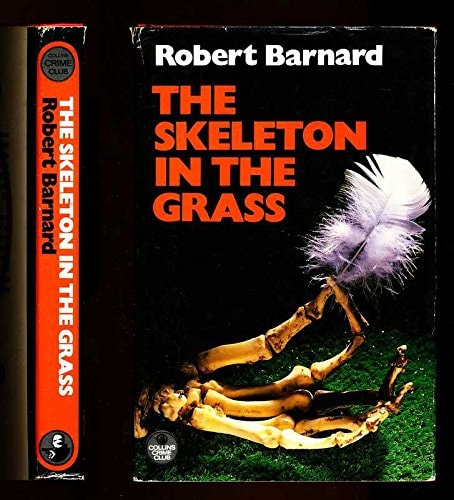
The Skeleton in the Grass
0
0
As an Amazon Associate and affiliate partner, Menrva Books earns from qualifying purchases. Learn more
Author Description
"The Skeleton In The Grass," reminiscent of Robert Barnard's much-acclaimed "Out of the Blackout," illuminates an earlier time and place: a small English village in 1936, as Franco's troops are conquering Spain and Hitler's legions are preparing to overrun Europe.The world at large may be sliding into the abyss of disaster, but life at Hallam, country seat of the glamorous and renowned Hallam family, still represents the ultimate in British civilization. Teatime, with its cucumber sandwiches and cream cakes, continues as it has for a hundred years.It's not that the Hallam family ignores the world outside its gracious doors. On the contrary, Helen and Dennis Hallam care passionately about peace and principle, and Dennis dramatically conveys these views to the nation in his controversial weekly review column.Avowed pacifists, Helen and Dennis represent a political stance that the villagers mistrust and fear. That fear and suspicion turn to nasty pranks when a sinister Fascist major gains control over some of the local youths. Helen and Dennis, and their sons Oliver and Will, become the victims of cruel taunts and the kind of teasing that leads to terror.As the Hallams and villagers grow more hostile, we see the story through the eyes of Sarah Causeley, and idealistic young woman who has recently come to be nursery governess at Hallam. To Sarah, the Hallams represent beauty, brilliance, and style-an idyllic life in the midst of chaos.But as she watches, the Hallams' world begins to disintegrate, and a tense and unexpected encounter leads to a shocking murder.Much more than a crime novel, "The Skeleton in the Grass" is an extraordinary piece of fiction that captures the essence of a family that captures the essence of a family and a world on the brink of extinction. With subtlety and skill, Robert Barnard amazes with his versatility and storytelling power.
Menrva's Summary
THE PULSE
A young governess finds her idyllic view of a prominent, pacifist family shattered when local tensions and political extremism culminate in a violent murder. Sarah Causeley arrives at the Hallam estate in 1936, expecting a life of refinement and intellectual stimulation among the glamorous Hallam family. However, the family's staunch pacifism and public political stances draw the ire of the local village, which is increasingly influenced by rising fascist sentiment. As the social divide deepens into harassment and terror, the narrative, told through Sarah's observant perspective, tracks the slow disintegration of the Hallams' sheltered existence. The story moves from domestic tension to a sudden, shocking act of violence that forces the characters to confront the harsh realities of a world on the brink of war.
INSIDE THE PAGES
- First-person narrative perspective through the eyes of an outsider
- Historical setting in 1936 England during the rise of European fascism
- Exploration of the clash between pacifist ideals and local political hostility
- Focus on the social dynamics of a small English village
- Gradual escalation from psychological harassment to physical violence
- Examination of class distinctions and the insulation of the wealthy
- Atmospheric depiction of the pre-war era
- Integration of political commentary within a traditional mystery framework
THE COLLECTIVE ECHO
This novel is frequently noted for its departure from standard procedural tropes in favor of a more character-driven, atmospheric study of pre-war social tensions. Readers often highlight the author's ability to balance the domestic setting of a country estate with the encroaching darkness of 1930s European politics. The narrative is characterized by a slow-burn pacing that prioritizes the psychological unraveling of the Hallam family over rapid-fire action. Critics and readers alike often point to the protagonist's evolving perception of her employers as the primary engine of the story's emotional weight. The work is generally regarded as a sophisticated example of historical crime fiction that emphasizes the fragility of civilization.
Page Count:
224
Publication Date:
1987-11-02
Publisher:
Collins Crime
ISBN-10:
0002321602
ISBN-13:
9780002321600
Crime
Mystery
Historical Fiction
Literature & Fiction
Classic Crime
Mystery Thriller & Suspense
Genre Fiction
Contemporary
British literature
Community Tags
Other Editions(2)

Similar Books



Reader Comments
Share Your Thoughts
No comments yet. Be the first to share your thoughts!