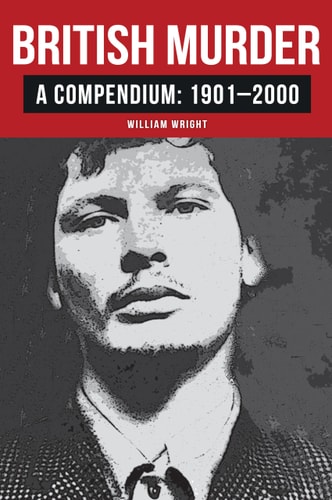
British Murder: A Compendium 1901-2000
0
0
As an Amazon Associate and affiliate partner, Menrva Books earns from qualifying purchases. Learn more
Author Description
George Orwell wrote a famous essay, 'Decline Of The English Murder', which appeared in the Socialist weekly 'Tribune' on 15 February 1946. He lamented the passing of the classic murderers such as Seddon, Crippen and Smith and considered modern murder as banal, meaningless. He was wrong. No murder is meaningless. Every crime reveals something about the culprit and the victim, as this book proves. Any real study of Neville Heath, John Haigh or John Christie - three of the most notorious psychopaths of the post-war years - reveals fascinating and, in Heath`s case especially, tragic stories. And the progress of forensics in the second half of the 20th century is a remarkable tale in itself. It becomes harder and harder to get away with murder - and yet people still think they can outwit the law; some do. The last entry is in some ways the worst; the deeds of Dr Harold Shipman, a bearded egotist who would have been a great companion for Drs Palmer, Pritchard and Lamson in the 19th century, who proves that the children of Cain are still with us.
Menrva's Summary
THE THESIS
The book investigates the evolution of murder in Britain throughout the 20th century, challenging the notion that modern crimes are inherently less significant than those of the past. It examines notorious cases from Neville Heath, John Haigh, and John Christie to Dr. Harold Shipman, demonstrating how each crime reveals aspects of both the perpetrator and the victim. The narrative also traces the significant advancements in forensic science during the latter half of the century, highlighting the increasing difficulty of evading justice. Ultimately, the book argues that despite these advancements, the capacity for extreme malice persists.
THE SCOPE MAP
- Detailed examination of post-war British murderers including Neville Heath, John Haigh, and John Christie.
- Analysis of the crimes and psychological profiles of notorious serial killers.
- Exploration of the progress and impact of forensic science in criminal investigations during the 20th century.
- Case studies of individuals who committed murder despite the increasing effectiveness of law enforcement.
- Discussion of Dr. Harold Shipman as a contemporary example of extreme criminal behavior.
- Contextualization of 20th-century British murders within the broader history of crime.
- Consideration of George Orwell's essay 'Decline Of The English Murder' as a point of departure.
THE AUTHORITY PERSPECTIVE
This compendium offers a detailed look at British murder cases from 1901 to 2000, using notorious figures like Neville Heath, John Haigh, and John Christie as focal points. The book contrasts Orwell's lament about the 'banal' nature of modern murder with the reality of significant and often tragic crimes. It also highlights the parallel development of forensic science, which made evading the law increasingly difficult over the century. The inclusion of Dr. Harold Shipman as a final, chilling example underscores the enduring presence of profound malevolence.
Page Count:
288
Publication Date:
2019-01-15
Publisher:
Amberley Publishing
ISBN-10:
1445687240
ISBN-13:
9781445687247
Non-Fiction
History
True Crime
Biography
Community Tags
Similar Books