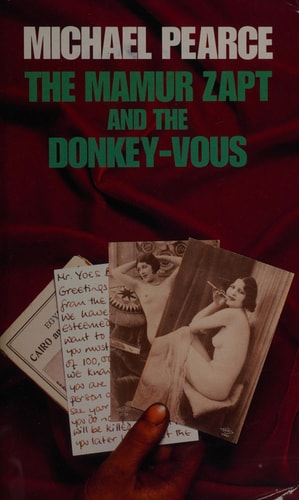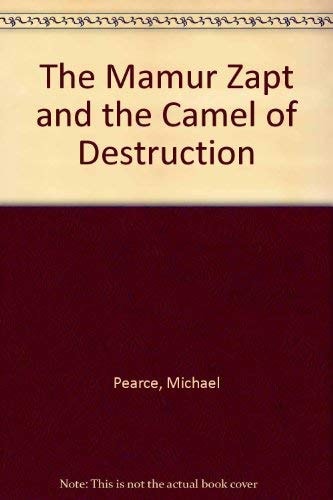
Mamur Zapt and the Camel of Destruction
0
0
As an Amazon Associate and affiliate partner, Menrva Books earns from qualifying purchases. Learn more
Author Description
Cairo, 1910. Captain Owen, The Mamur Zapt, is the head of Egypt's Political CID in the heyday of British Rule. He is ultimately responsible for law and order in the Khedive's Cairo. When the rules, whether obvious or hidden, are flouted, he steps into action although it sometimes looks like he's merely stepped sideways, out of the way.Now it is the end of the boom, leaving banks beleaguered and borrowers in trouble whether the poorest land-working fellahin or the richest land-owning Pashas. Then a civil servant suspiciously dies at his desk. The whiff of corruption is in the air. Even Owen, supposed to be investigating the affair, appears to be living beyond his means. As he turns to such unlikely allies as the Grand Mufti, the local barber, and the Widow Shawquat, he penetrates to the heart of such sinister organizations as the Khedive's Agricultural Society (?). The rich are tricky, and money speaks louder than words, challenging Owen to use all his skills to stop the Camel of Destruction...
Menrva's Summary
THE PULSE
Captain Owen, the Mamur Zapt, must navigate a web of financial corruption and political intrigue in 1910 Cairo when a suspicious death threatens the stability of the British-occupied city. Tasked with maintaining order, Owen finds himself under scrutiny as he investigates the death of a civil servant amidst a collapsing economic boom. He must contend with powerful Pashas, suspicious agricultural societies, and his own precarious reputation to uncover the truth. The narrative unfolds through a measured, observant lens, capturing the complex social hierarchies of colonial Egypt.
INSIDE THE PAGES
- Atmospheric depiction of 1910 Cairo under British rule
- Procedural investigation into a suspicious civil servant death
- Exploration of economic instability and its impact on various social classes
- Use of unconventional informants including a local barber and the Grand Mufti
- Focus on political maneuvering within the Khedive's administration
- Examination of corruption within agricultural and financial institutions
- Protagonist characterized by a subtle, indirect approach to law enforcement
- Integration of historical detail regarding colonial power dynamics
THE COLLECTIVE ECHO
The narrative style suggests a focus on the intricate social and political landscape of early 20th-century Egypt. Readers likely appreciate the blend of historical detail with the methodical pace of a classic detective investigation. The premise points to a character-driven mystery where the setting functions as a primary antagonist to the protagonist's goals. The work appears to prioritize cultural nuance and the complexities of colonial administration over high-octane action sequences.
Page Count:
224
Publication Date:
1993-01-01
Publisher:
Collins (HarperCollins)
ISBN-10:
0002324873
ISBN-13:
9780002324878
Mystery
Crime
Gareth Cadwallader Owen Fictitious character
Literature & Fiction
Detective
Historical
Egypt fiction
Adventure fiction
Historical Mystery
Crime & mystery
Literary
Community Tags
Similar Books