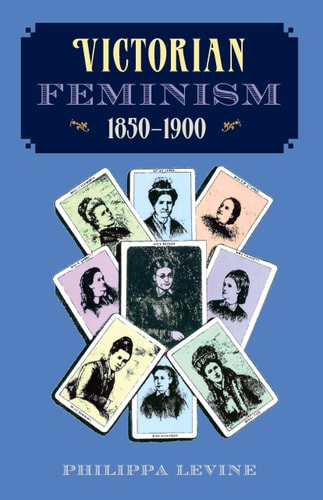
Victorian Feminism, 1850-1900
0
0
As an Amazon Associate and affiliate partner, Menrva Books earns from qualifying purchases. Learn more
Author Description
The second half of the nineteenth century saw in newly industrialized England the creation of a "domestic ideology" that drew a sharp line between domestic woman and public man. Though never the dominant reality, this demarcation of men's and women's spheres ordered people's values and justified the existing social structure. Out of this context sprang a women's movement that celebrated its female identity, its campaigns "concerned as much with promoting that optimistic self-image as with a simple call for equality with men." Levine traces the changing face of a half century of England's feminist movement, the personalities who dominated it, its pressing issues, and the tactics employed in the fight. Political themes common to the specific protests, she finds, included women's moral superiority, a close-knit sense of a supportive female community, and a conscious woman-centeredness of interests. Along the way, Levine puts to rest many inaccuracies and assumptions that have dogged the history of presuffragette feminism, causing it to be discredited or dismissed. She refutes, for example, the judgement that the movement served only the needs of bourgeois women, and she warns against the pitfall of defining feminism by the standards of a male politics whose practices make comparisons inadequate and unsuitable. Levine has organized her study with an eye to the breadth of concerns that characterized England's nineteenth-century feminism: women's entry into education and the professions; trade unionism, working conditions, equal pay; suffrage and other political and property rights for women; marriage and morality issues--prostitution, incest, venereal disease, wife abuse, pornography, and equal rights to divorce.
Menrva's Summary
THE THESIS
The second half of the nineteenth century in England saw the rise of a "domestic ideology" that sharply delineated spheres of public men and domestic women. This ideology, though not always the lived reality, shaped societal values and justified the existing social structure, giving rise to a women's movement that celebrated female identity and campaigned for both equality and an optimistic self-image. Philippa Levine traces the evolution of this feminist movement over fifty years, examining its key figures, pressing issues, and adopted tactics. The study highlights themes of women's moral superiority, a strong sense of female community, and a conscious focus on women-centered interests.
THE SCOPE MAP
- Analysis of the "domestic ideology" and its impact on gender roles in Victorian England.
- Exploration of the feminist movement's campaigns, focusing on both equality and the promotion of female identity.
- Examination of the personalities, issues, and tactics employed by feminists during the period 1850-1900.
- Discussion of political themes including women's moral superiority, female community, and woman-centered interests.
- Refutation of common historical inaccuracies, such as the notion that the movement solely served bourgeois women.
- Coverage of diverse concerns: women's education and professions, trade unionism, suffrage, property rights, marriage, morality, and divorce rights.
THE AUTHORITY PERSPECTIVE
Philippa Levine's study is recognized for its thorough examination of Victorian feminism, challenging long-held assumptions and providing a nuanced perspective on the movement's complexities. The work is noted for its detailed tracing of the feminist movement's evolution, its key figures, and its diverse range of concerns, from education and professions to political rights and social issues. Levine's approach is praised for its critical engagement with historical narratives, particularly in refuting the idea that the movement was exclusive to bourgeois women and in cautioning against defining feminism solely by male political standards. The book offers a comprehensive overview that aims to correct the historical record and provide a more accurate understanding of this pivotal era in feminist history.
Page Count:
176
Publication Date:
1994-01-01
Publisher:
University Press of Florida
ISBN-10:
0813013216
ISBN-13:
9780813013213
Non-Fiction
History
Social History
Feminism
Victorian Era
Community Tags
Similar Books