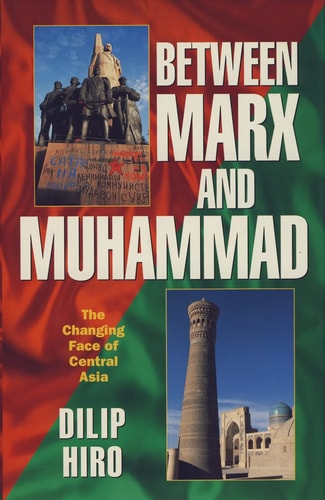
Between Marx and Muhammad: The Changing Face of Central Asia
0
0
As an Amazon Associate and affiliate partner, Menrva Books earns from qualifying purchases. Learn more
Author Description
The "Great Game" in the 19th century was the battle between Russia and Britain for influence in Central Asia and for control of the land-routes to India, the "Jewel in the Crown". "The Great Game, Mark II", just beginning, is the struggle between Islamic fundamentalism and the West (characterized respectively by Iran and Turkey) for dominance in the six newly-independent Central Muslim republics of Azerbaijan, Turkmenistan, Uzbekistan, Tajikistan, Kirghizia and Kazakhstan. (Of these, Kazakhstan - nearly as large as India - possesses hundreds of strategic and tactical nuclear weapons. The Muslim fundamentalists' recent electoral success in Algeria (subsequently suppressed) raises the prospect of fundamentalism holding sway from the Atlas Mountains to Indonesia. It is vital to understand the context in which the Ankara-Tehran contest to shape the future of Central Asia - a region of immense strategic significance - is developing as a proxy struggle between the West and militant Islam. Dilip Hiro has travelled to the new Muslim states (as well as Turkey and Iran) and interviewed politicians, religious leaders and writers of all descriptions. His book of analysis and reportage is a contribution to understanding one of the central political issues in the post-communist world.
Menrva's Summary
THE THESIS
This work investigates the emerging geopolitical struggle for influence in the six newly independent Central Asian republics following the collapse of the Soviet Union. Author Dilip Hiro, an experienced journalist and analyst, utilizes extensive on-the-ground reportage and interviews with regional political and religious figures to map the competing interests of Iran and Turkey. He argues that this regional rivalry functions as a proxy for a broader global tension between Western-aligned secularism and militant Islamic fundamentalism in the post-communist era.
THE SCOPE MAP
What You Will Find
- Analysis of the political landscapes in Azerbaijan, Turkmenistan, Uzbekistan, Tajikistan, Kirghizia, and Kazakhstan.
- Examination of the 'Great Game, Mark II' as a struggle for regional dominance between Iran and Turkey.
- Primary source interviews with politicians, religious leaders, and intellectuals across the region.
- Assessment of the strategic implications of nuclear assets and religious movements in the post-Soviet space.
THE AUTHORITY PERSPECTIVE
This text provides a detailed, contemporary snapshot of the volatile political climate in Central Asia during the early 1990s. The analysis offers a grounded perspective on the intersection of post-communist state-building and the rise of regional religious influence.
Page Count:
402
Publication Date:
1994-01-01
Publisher:
HarperCollins
ISBN-10:
0002551950
ISBN-13:
9780002551953
History
Geopolitics
Islam
Central Asia
International relations
Community Tags
Similar Books