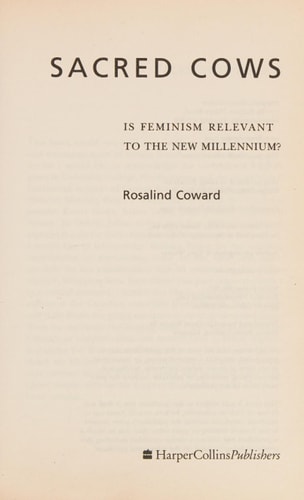
Sacred Cows: Is Feminism Relevant to the New Millennium?
0
0
As an Amazon Associate and affiliate partner, Menrva Books earns from qualifying purchases. Learn more
Author Description
When women set our to change the world and their place in it in the 1960s and 1970s, it seemed they had a long struggle ahead. Educational standards for girls were lower, they were not expected to take on serious jobs, women did not get paid as much as men in identical jobs and they were not given maternity provision (not least because they were not expected to work after getting married, let alone having children). This was the tip of the iceberg. Women's health was not researched as thoroughly as men's, there were few women doctors, lawyers, politicians, senior managers... the list goes on.Within a generation, our world has been transformed into one in which women are assumed to be the equals of men. Indeed, many feminists continue to argue that women are superior to men. But in a world in which girls consistently attain better exam results than boys, achieve a higher percentage of university places, are more likely to get jobs and whose expectations--of flexible working lives--are more attuned to the needs of the modern workplace, such a suggestion seems as discriminatory as the world of the 1960s was to women.In this controversial, hard-hitting and myth-debunking book, Ros Coward looks at feminism's achievements and asks: "Is it now holding us back?" Is it actually damaging of real relations between men and women, demonising men and denying them the right to understanding and equality in a world that is harsher for them than ever before?Ros Coward is one of Britain's most witty, articulate and highly respected writers on women's issues, with a controversial weekly column in The Guardian and two books on sexual politics already to her name (Our Treacherous Hearts and Female Desire). This highly contentious book asks the most un-PC of questions: "Do we need feminism anymore?" As the writer is perceived as firmly in the feminist fold, her stance in this book will shock a lot of people.
Menrva's Summary
THE THESIS
This book investigates whether the foundational goals of feminism have been achieved to such an extent that the movement itself has become an obstacle to modern gender equality. Rosalind Coward, a prominent British commentator on sexual politics, utilizes her background in media analysis and social theory to examine the shifting landscape of gender roles since the 1960s. She argues that the contemporary workplace and educational systems have evolved to favor women, suggesting that traditional feminist rhetoric may now be fostering unnecessary division rather than progress.
THE SCOPE MAP
What You Will Find
- Comparative analysis of educational and professional outcomes for men and women in the late 20th century.
- Critique of modern feminist discourse regarding the demonization of men.
- Examination of the historical necessity of feminism versus its current perceived utility.
- Discussion on the changing expectations of the modern workplace and the role of gender in domestic and public life.
THE AUTHORITY PERSPECTIVE
The subject matter points to a provocative and dense sociological critique that challenges established ideological frameworks within gender studies. The framing suggests an accessible yet highly contentious argument intended to spark debate among both supporters and critics of modern feminist movements.
Page Count:
256
Publication Date:
1999-01-01
Publisher:
Harper Collins
ISBN-10:
0002555514
ISBN-13:
9780002555517
Politics
Sex Role
Social Commentary
Sociology
Womens Studies
Feminist Theory
sexes and their interrelations
Man-woman relationships
Féminisme
Mannen
Feminism
Gender Studies
Community Tags
Other Editions(2)

Similar Books
Reader Comments
Share Your Thoughts
No comments yet. Be the first to share your thoughts!