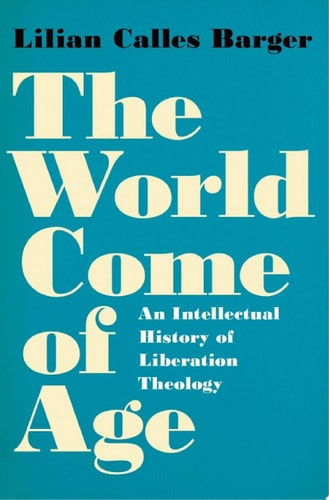
The World Come of Age: An Intellectual History of Liberation Theology
0
0
As an Amazon Associate and affiliate partner, Menrva Books earns from qualifying purchases. Learn more
Author Description
On November 16, 2017, Pope Francis tweeted, "Poverty is not an accident. It has causes that must be recognized and removed for the good of so many of our brothers and sisters." With this statement and others like it, the first Latin American pope was associated, in the minds of many, with a stream of theology that swept the Western hemisphere in the 1960s and 70s, the movement known as liberation theology. Born of chaotic cultural crises in Latin America and the United States, liberation theology was a trans-American intellectual movement that sought to speak for those parts of society marginalized by modern politics and religion by virtue of race, class, or sex. Led by such revolutionaries as the Peruvian Catholic priest Gustavo Gutiérrez, the African American theologian James Cone, or the feminists Mary Daly and Rosemary Radford Ruether, the liberation theology movement sought to bridge the gulf between the religious values of justice and equality and political pragmatism. It combined theology with strands of radical politics, social theory, and the history and experience of subordinated groups to challenge the ideas that underwrite the hierarchical structures of an unjust society. Praised by some as a radical return to early Christian ethics and decried by others as a Marxist takeover, liberation theology has a wide-raging, cross-sectional history that has previously gone undocumented. In The World Come of Age, Lilian Calles Barger offers for the first time a systematic retelling of the history of liberation theology, demonstrating how a group of theologians set the stage for a torrent of new religious activism that challenged the religious and political status quo.
Menrva's Summary
THE THESIS
This work investigates the origins, development, and cross-continental influence of liberation theology as a transformative intellectual movement in the 1960s and 1970s. Lilian Calles Barger, a historian of religion and culture, utilizes a systematic historical framework to trace how theologians in Latin America and the United States synthesized religious ethics with radical social theory. The book argues that this movement functioned as a critical response to systemic marginalization, effectively challenging the status quo through a fusion of faith and political activism.
THE SCOPE MAP
What You Will Find
- A comprehensive history of liberation theology across the Western hemisphere.
- Analysis of key figures including Gustavo Gutiérrez, James Cone, Mary Daly, and Rosemary Radford Ruether.
- Examination of the intersection between religious justice and political pragmatism.
- Documentation of the movement's influence on modern religious activism.
Scope Limits
- The text focuses primarily on the intellectual history of the movement rather than a granular sociological study of specific local congregations.
- It does not provide an exhaustive theological critique of the movement's doctrines from a traditionalist perspective.
THE AUTHORITY PERSPECTIVE
Scholars and historians recognize this text as a significant contribution to the documentation of a previously under-examined intellectual movement. Readers frequently note the clarity of the prose in navigating complex theological and political intersections, making it a valuable resource for those studying the history of modern religious thought.
Page Count:
392
Publication Date:
2018-01-01
Publisher:
Oxford University Press
ISBN-10:
0190695412
ISBN-13:
9780190695415
History
Religion
Liberation theology
Theology
Church Leadership
European History
American History
Community Tags
Similar Books