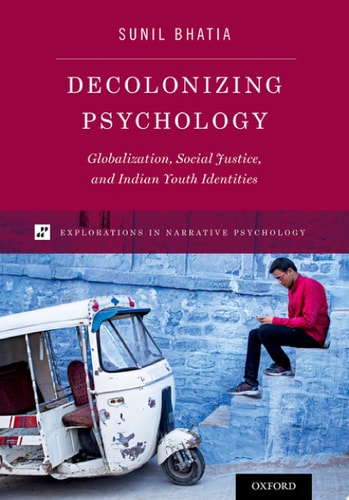
Decolonizing Psychology: Globalization, Social Justice, and Indian Youth Identities
0
0
As an Amazon Associate and affiliate partner, Menrva Books earns from qualifying purchases. Learn more
Author Description
In Recent Years, The News Media Has Directed A Significant Amount Of Attention To The Effect Of Globalization On The Second Most Populous Nation In The World: India. With The Emergence Of New Economic Opportunities And The Influx Of Foreign Popular Culture And Commodities, India Has Experienced An Enormous Sea Of Change In The Last Few Decades. In Decolonizing Psychology: Globalization, Social Justice, And Indian Youth Identities, Author Sunil Bhatia Focuses On The Psychological Tensions That These Changes Have Brought Upon Indian Youth Today. Drawing On Dozens Of Interviews, Bhatia Offers Readers A Compelling Glimpse And Analysis Of How These Youth Populations Are Engaging With The Emerging Presence Of Globalization In Their Day-to-day Lives. As Bhatia Explains, Young Indians Use The Term 'world Class Selves' As A Way To Identify And Describe The Ways In Which Globalization Has Strengthened Their Standing In The World. By Frequenting Urban Cafes And Bars, Watching American Television And Cinema, Traveling Abroad, And Regularly Consuming Foreign Commodities, Indian Youth Absorb The Westernized Culture And View Themselves As Peers To Their Western Counterparts. At The Same Time, However, These Young Indians Proudly Hold Onto Their Homeland's Traditions Governing Family And Religious Values. With Remarkable Clarity And Nuance, Bhatia Sheds An Important Light On The Universalizing Power And The Colonizing Dimensions Of Euro-american Psychology. By Integrating Insights From Postcolonial, Narrative, And Cultural Psychologies To Explore How Euro-american Scientific Psychology Became The Standard Approach, Bhatia Reminds Readers Of Whose Stories Are Not Being Told, What Knowledge Is Not Being Considered, And Whose Lives Are Not Included In The Central Understanding Of Psychology Today.
Menrva's Summary
THE THESIS
How does the rapid expansion of globalization and Western-centric psychological frameworks impact the identity formation of contemporary Indian youth? Sunil Bhatia, a scholar in cultural and narrative psychology, investigates the intersection of economic modernization and psychological development in India. By synthesizing postcolonial theory with empirical interview data, he argues that current psychological standards often ignore non-Western experiences, necessitating a decolonization of the discipline to better represent diverse global identities.
THE SCOPE MAP
What You Will Find
- Analysis of the 'world class self' identity construct among urban Indian youth.
- Integration of postcolonial, narrative, and cultural psychology frameworks.
- Qualitative data derived from extensive interviews with young Indians.
Scope Limits
- The text focuses primarily on urban, middle-to-upper-class Indian youth populations.
- It does not provide a comprehensive history of Indian psychological institutions.
THE AUTHORITY PERSPECTIVE
Experts recognize this work as a significant contribution to the critique of Euro-American hegemony within the psychological sciences. Readers frequently note the academic density of the prose, which is best suited for students and researchers in sociology and cross-cultural psychology.
Page Count:
216
Publication Date:
2017-01-01
Publisher:
Oxford University Press
ISBN-10:
0190690259
ISBN-13:
9780190690250
Psychology
Identity Studies
Sociology
Globalization
Community Tags
Other Editions(2)
Similar Books













Reader Comments
Share Your Thoughts
No comments yet. Be the first to share your thoughts!