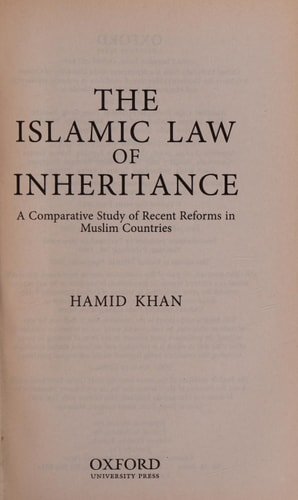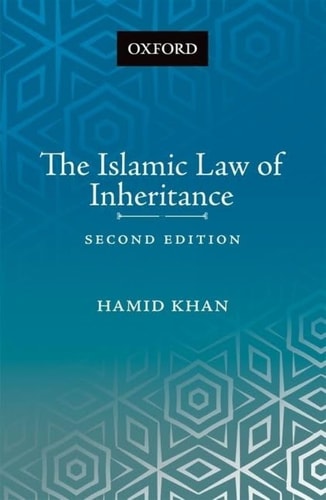
The Islamic Law of Inheritance: A Comparative Study of Recent Reforms in Muslim Countries
0
0
As an Amazon Associate and affiliate partner, Menrva Books earns from qualifying purchases. Learn more
Author Description
This book covers the study of the Islamic law of succession, intestate as well as testamentary. Based on original sources, it includes the historical and theological basis of law developed by the Muslim schools of jurisprudence. The book explains clearly the Sunni and Shia law of inheritance. The points of view of all four Sunni schools of jurisprudence have been discussed in depth wherever there is divergence of opinion amongst the jurists of these schools. The author presents a comparative study between the Sunni and Shia laws of inheritance and focusses on problems being faced by Muslims, due to the strict application of traditional Islamic law in their contemporary situations. These problems have been analyzed in the light of various reforms introduced by Islamic countries to resolve such issues.The second edition includes the latest case law laid down by the superior courts in Pakistan and the latest reforms introduced by the Islamic countries have also been included in this edition.This book is an essential component of the course on 'Muslim Personal Law' for LL.B. students and the course on 'Islamic Law' for LL.M. students. It will also be of great interest to lawyers, judges, law teachers, law students, civil servants and revenue officers and the general reader and students of Islam.
Menrva's Summary
THE THESIS
This book investigates the intersection of traditional Islamic jurisprudence regarding succession and the modern legislative reforms enacted by various Muslim-majority nations to address contemporary societal challenges. Hamid Khan, a legal scholar, utilizes primary theological sources and historical jurisprudence to construct a framework for understanding inheritance law. He systematically contrasts Sunni and Shia legal traditions while examining the divergence of opinion among the four Sunni schools of jurisprudence. The text evaluates how these ancient legal structures function within modern state systems and identifies the specific pressures that necessitate legislative reform.
THE SCOPE MAP
What You Will Find
- Comparative analysis of Sunni and Shia inheritance laws
- Historical and theological foundations of Islamic succession
- Examination of legislative reforms in contemporary Muslim countries
- Case law analysis from superior courts in Pakistan
Scope Limits
- Does not provide a comprehensive global survey of all Islamic legal jurisdictions
- Excludes non-legal sociological impacts of inheritance practices
THE AUTHORITY PERSPECTIVE
Legal scholars and practitioners frequently identify this text as a foundational resource for students of Muslim Personal Law. Experts highlight the clarity with which the author navigates complex jurisprudential divergences for both academic and professional audiences.
Page Count:
290
Publication Date:
2021-01-01
Publisher:
Oxford University Press
ISBN-10:
0190704217
ISBN-13:
9780190704216
Religion
Middle Eastern
Inheritance Law
Law
Islamic Studies
Comparative Law
Community Tags
Similar Books