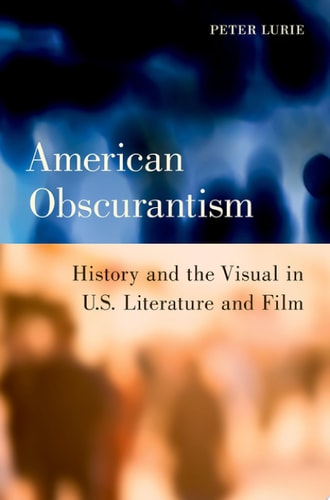
American Obscurantism: History and the Visual in U.S. Literature and Film
0
0
As an Amazon Associate and affiliate partner, Menrva Books earns from qualifying purchases. Learn more
Author Description
American Obscurantism argues for a salutary indirection in U.S. culture. From its earliest canonical literary works through late twentieth and early twenty-first century film, the most compelling manifestations of America's troubled history have articulated this content through a unique formal and tonal obscurity. Envisioning the formidable darkness attending racial history at nearly every stage of the republic's founding and ongoing development, writers such as William Faulkner and Hart Crane or directors like the Coen brothers and Stanley Kubrick present a powerful critique of American conquest, southern plantation culture, and western frontier ideology. The book traces this arc from one of visual history's notoriously troubled texts: D.W. Griffith's The Birth of a Nation (1915). American Obscurantism engages the basis of these explorations in Poe and Melville, each of whom present notable occlusions in characters' racial understanding, an obtuseness or naïveté that is expressed by a corresponding formal opacity. Such oblique historicity as the book describes allows a method at odds with - and implicitly critical of - the historicizing trend that marked literary studies in the wake of the theoretical turn. Citing critiques such as those of Tim Dean and others of efforts to politicize literary and cultural studies, this book restores an emphasis on aesthetic and medium-specific features to argue for a formalist historicity. Working through challenges to an implicitly white-,bourgeois, heteronormative polity, American Obscurantism posits an insistent, vital racial otherness at the heart of American literature and cinema. It examines this pattern across a canon that shows more self-doubt than assuredness, arguing for the value of openness and questioning in place of epistemological or critical certainty. Following the insistence on a lamenting historical look back in the cases of Faulkner, Kubrick, and the Coens, the book ends by linking Crane's famous optimism in The Bridge to a more contemporary, self-questioning aesthetic.
Menrva's Summary
THE THESIS
This book investigates how American literature and film utilize formal obscurity and aesthetic indirection to critique the nation's troubled racial history and ideological foundations. Peter Lurie, a scholar of American literature and cinema, challenges the prevailing historicizing trends in cultural studies by advocating for a formalist approach. He argues that by focusing on the medium-specific aesthetics of writers like Faulkner and Melville and directors like Kubrick and the Coen brothers, one can uncover a persistent, vital racial otherness that resists the certainty of traditional political readings.
THE SCOPE MAP
What You Will Find
- Analysis of canonical literary works by Poe, Melville, Faulkner, and Crane.
- Examination of cinematic techniques in films by D.W. Griffith, Stanley Kubrick, and the Coen brothers.
- A theoretical framework prioritizing formal opacity over explicit political historicism.
- Critiques of white, bourgeois, and heteronormative cultural narratives.
Scope Limits
- The text does not provide a comprehensive history of American film or literature, focusing instead on specific examples of "obscurantism."
- It does not engage with every major movement in American cultural studies, limiting its scope to those relevant to its formalist argument.
THE AUTHORITY PERSPECTIVE
Scholars in the field of literary and film studies recognize this work as a rigorous defense of formalist methodology in the face of politicized cultural analysis. Readers frequently note the academic density of the prose, which is intended for an audience familiar with contemporary critical theory and aesthetic philosophy.
Page Count:
232
Publication Date:
2018-01-01
Publisher:
Oxford University Press
ISBN-10:
0190842636
ISBN-13:
9780190842635
History
Formalism
In literature
Literary Criticism
Professional Career & Trade
Motion pictures
American History
American Studies
Film Studies
Cultural History
English & College Success
Graphic ArtsCommunicationsDesign
English
Community Tags
Similar Books