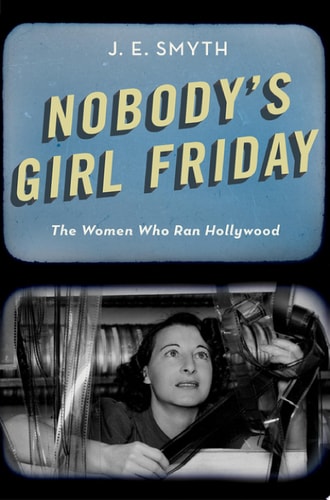
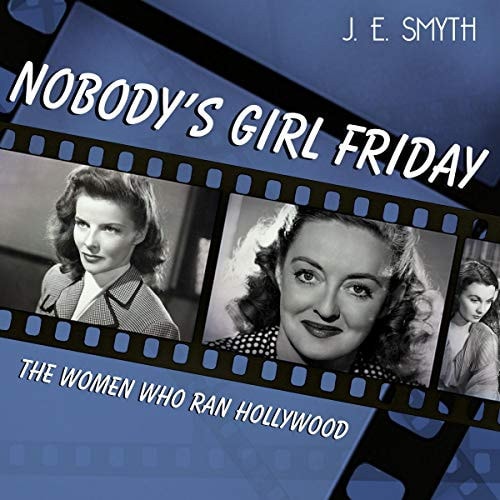
Nobody's Girl Friday: The Women Who Ran Hollywood
0
0
As an Amazon Associate and affiliate partner, Menrva Books earns from qualifying purchases. Learn more
Author Description
Looking back on her career in 1977, Bette Davis remembered with pride, "Women owned Hollywood for twenty years." She had a point. Between 1930 and 1950, over 40% of film industry employees were women, 25% of all screenwriters were female, one woman ran MGM behind the scenes, over a dozen women worked as producers, a woman headed the Screen Writers Guild three times, and press claimed Hollywood was a generation or two ahead of the rest of the country in terms of gender equality and employment. The first comprehensive history of Hollywood's high-flying career women during the studio era, Nobody's Girl Friday covers the impact of the executives, producers, editors, writers, agents, designers, directors, and actresses who shaped Hollywood film production and style, led their unions, climbed to the top during the war, and fought the blacklist. Based on a decade of archival research, author J.E. Smyth uncovers a formidable generation working within the American film industry and brings their voices back into the history of Hollywood. Their achievements, struggles, and perspectives fundamentally challenge popular ideas about director-based auteurism, male dominance, and female disempowerment in the years between First and Second Wave Feminism.Nobody's Girl Friday is a revisionist history, but it's also a deeply personal, collective account of hundreds of working women, the studios they worked for, and the films they helped to make. For many years, historians and critics have insisted that both American feminism and the power of women in Hollywood declined and virtually disappeared from the 1920s through the 1960s. But Smyth vindicates Bette Davis's claim. The story of the women who called the shots in studio-era Hollywood has never fully been told-until now.
Menrva's Summary
THE THESIS
This book investigates the historical reality of female influence and professional power within the American film industry during the studio era, challenging the narrative of systemic female disempowerment. Author J.E. Smyth, a scholar of film history, utilizes a decade of archival research to document the contributions of women who served as executives, producers, writers, and editors between 1930 and 1950. The work argues that these women were not peripheral figures but central architects of Hollywood production, effectively refuting the long-standing academic consensus that female agency in the industry vanished between the two waves of feminism.
THE SCOPE MAP
What You Will Find
- Analysis of female employment statistics in Hollywood from 1930 to 1950.
- Documentation of women in leadership roles including studio management, union presidency, and screenwriting.
- Examination of the impact of the blacklist on female industry professionals.
- Case studies of individual careers across various production departments.
Scope Limits
- The text focuses primarily on the studio era and does not provide an exhaustive history of the silent film period or the post-1960s industry landscape.
THE AUTHORITY PERSPECTIVE
Scholars and film historians recognize this work as a significant revisionist text that corrects long-standing misconceptions regarding gender dynamics in early Hollywood. Readers frequently note the meticulous archival detail and the author's ability to synthesize complex industry data into a coherent historical narrative.
Page Count:
328
Publication Date:
2018-01-01
Publisher:
Oxford University Press
ISBN-10:
0190840846
ISBN-13:
9780190840846
Biography
History
Womens History
Woman Studies
Hollywood
Humanities
Film Studies
Los Angeles
Community Tags
Other Editions(2)
Similar Books