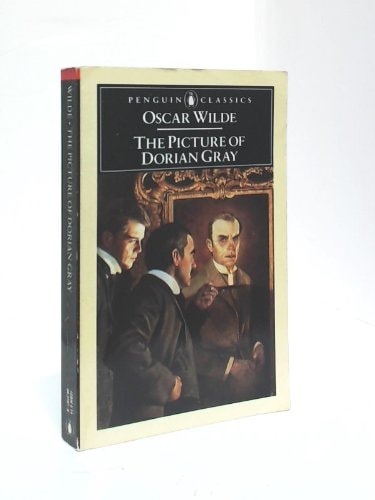
The Picture of Dorian Gray
0
0
As an Amazon Associate and affiliate partner, Menrva Books earns from qualifying purchases. Learn more
Author Description
Written in his only novel, The Picture of Dorian Gray, Oscar Wilde explores the moral corruption of a young man who sells his soul to keep his youth and beauty. As Dorian Gray descends into a life of debauchery and cruelty, his portrait, painted by Basil Hallward, ages and reflects the true state of his soul, while Dorian himself remains eternally young.
Menrva's Summary
THE PULSE
A young man sells his soul to preserve his youth, leaving his portrait to bear the physical marks of his moral decay. Dorian Gray, a beautiful and naive youth, becomes the subject of a portrait by artist Basil Hallward, only to be corrupted by the hedonistic philosophy of Lord Henry Wotton. As Dorian indulges in a life of debauchery and cruelty, he remains physically unchanged while his hidden portrait transforms into a grotesque reflection of his sins. The narrative, presented in a third-person omniscient perspective, explores the tension between aestheticism, morality, and the inevitable consequences of a life devoid of conscience.
INSIDE THE PAGES
- Exploration of aestheticism and the pursuit of pleasure
- Use of the portrait as a supernatural, symbolic mirror
- Sharp, aphoristic dialogue characteristic of Wilde
- Themes of vanity, corruption, and social hypocrisy
- Gothic atmosphere set within high-society London
- Psychological deterioration of the protagonist
- Contrast between outward beauty and inner rot
- Philosophical debates on the nature of art and morality
THE COLLECTIVE ECHO
This work is widely regarded as a seminal exploration of the dangers of aestheticism and the moral vacuum of the Victorian elite. Critics often highlight the sharp, witty dialogue and the haunting, symbolic nature of the central portrait as the primary strengths of the narrative. Readers frequently note the unsettling psychological depth of Dorian's transformation from an innocent youth to a hardened hedonist. The novel remains a cornerstone of literary study, consistently analyzed for its commentary on the duality of human nature and the societal obsession with surface appearances.
Page Count:
48
Publication Date:
1890-06-20
Publisher:
Penguin USA
ISBN-10:
0003701646
ISBN-13:
9780003701647
Horror
Gothic
Schools & Teaching
Victorian
classic
Classics
Philosophical
Literature & Fiction
Education Teaching