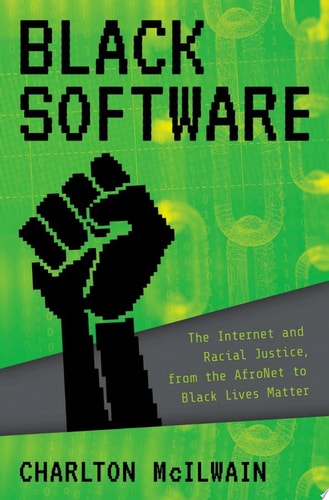
Black Software: The Internet & Racial Justice, from the AfroNet to Black Lives Matter
0
0
As an Amazon Associate and affiliate partner, Menrva Books earns from qualifying purchases. Learn more
Author Description
Activists, pundits, politicians, and the press frequently proclaim today's digitally mediated racial justice activism the new civil rights movement. As Charlton D. McIlwain shows in this book, the story of racial justice movement organizing online is much longer and varied than most people know. In fact, it spans nearly five decades and involves a varied group of engineers, entrepreneurs, hobbyists, journalists, and activists. But this is a history that is virtually unknown even in our current age of Google, Facebook, Twitter, and Black Lives Matter.Beginning with the simultaneous rise of civil rights and computer revolutions in the 1960s, McIlwain, for the first time, chronicles the long relationship between African Americans, computing technology, and the Internet. In turn, he argues that the forgotten figures who worked to make black politics central to the Internet's birth and evolution paved the way for today's explosion of racial justice activism. From the 1960s to present, the book examines how computing technology has been used to neutralize the threat that black people pose to the existing racial order, but also how black people seized these new computing tools to build community, wealth, and wage a war for racial justice.Through archival sources and the voices of many of those who lived and made this history, Black Software centralizes African Americans' role in the Internet's creation and evolution, illuminating both the limits and possibilities for using digital technology to push for racial justice in the United States and across the globe.
Menrva's Summary
THE THESIS
This book investigates the historical intersection of African American activism and the development of computing technology to determine how digital tools have been utilized both to reinforce and to challenge existing racial hierarchies. Charlton D. McIlwain, a professor of media, culture, and communication, utilizes extensive archival research and personal interviews to construct a comprehensive history of black digital engagement. He argues that the foundations of contemporary racial justice movements were laid by forgotten pioneers who integrated black political interests into the early architecture of the internet and computing systems.
THE SCOPE MAP
What You Will Find
- A chronological history of black engagement with computing from the 1960s to the present.
- Analysis of the dual role of technology as a tool for both systemic control and grassroots liberation.
- Documentation of the contributions of engineers, entrepreneurs, and activists who shaped early digital spaces.
Scope Limits
- The text focuses primarily on the United States context rather than a global comparative analysis of digital racial politics.
- It does not provide a technical manual for software development or current social media algorithmic engineering.
THE AUTHORITY PERSPECTIVE
Experts recognize this work as a foundational text for understanding the racialized history of the internet. Readers frequently note the meticulous archival detail and the author's ability to connect historical computing developments to modern social justice movements.
Page Count:
312
Publication Date:
2019-11-01
Publisher:
Oxford University Press
ISBN-10:
0190863846
ISBN-13:
9780190863845
History
Ethnic Studies
Technology
Trades & Technology
Minority Studies
African Americans
Technology & Engineering
Political Aspects
Sociology
Comparative Politics
African American
Social justice
Racism
Digital Media
Community Tags
Other Editions(2)

Similar Books