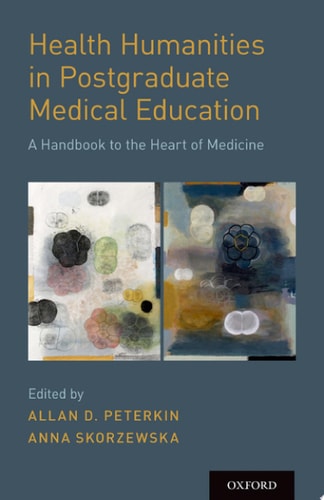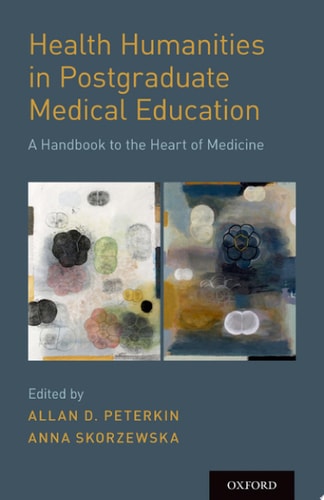
Health Humanities in Postgraduate Medical Education
0
0
As an Amazon Associate and affiliate partner, Menrva Books earns from qualifying purchases. Learn more
Author Description
Most medical schools in the US, Canada and UK now incorporate some form of arts and humanities-based teaching into their curricula. What happens in residency is another story. Most postgraduate programs do not continue the thread of such teaching although many residents would like to deepen their understanding of the medical humanities before they move into practice. The humanities emphasize "the human side of medicine", and can provide a counterpoint to the reductionism of evidence-based medicine and technological hubris for young doctors as they apply new knowledge and skills in ambiguous, real-life encounters with patients who are living with complicated health problems.Humanities-based education can help both sides of the relationship: programs are shown to reduce burnout and mental health issues in young physicians, and can also help learning practitioners grapple with the most difficult aspects of their craft: how does one persuade patients on a course of treatment, while respecting informed consent? How does one work with families? How does one listen to and treat patients exhibiting self-harm tendencies? Available research may demonstrate the efficacy of such exposures, but provide little practical advice or resources for setting up programs across specialty and sub-specialty disciplines.Health Humanities in Post-Graduate Medical Education will fill this gap in knowledge translation for the thousands of residency programs worldwide, allowing educators, supervisors, and residents themselves to create robust and educationally sound workshops, seminars, study groups, lecture series, research and arts-based projects, publications and events.
Menrva's Summary
THE THESIS
This book investigates how postgraduate medical education programs can effectively integrate arts and humanities-based teaching to address the limitations of purely clinical and evidence-based training. Authors Allan D. Peterkin and Anna Skorzewska, both established experts in the field of health humanities, argue that incorporating these disciplines is vital for mitigating physician burnout and improving the quality of patient-provider interactions. They provide a structured framework for educators and residents to implement humanities-based projects within the high-pressure environment of residency training.
THE SCOPE MAP
What You Will Find
- Pedagogical frameworks for workshops, seminars, and study groups
- Strategies for addressing burnout and mental health in residents
- Practical guidance for navigating complex patient encounters and ethical dilemmas
- Methods for implementing arts-based projects and research initiatives
Scope Limits
- The text focuses primarily on postgraduate residency programs rather than undergraduate medical school curricula
- It does not provide exhaustive clinical medical data, focusing instead on the humanities-based educational methodology
THE AUTHORITY PERSPECTIVE
Educators and medical program directors frequently cite this work as a practical manual for bridging the gap between clinical training and the humanistic aspects of patient care. Experts highlight the text as a necessary resource for those seeking to implement structured humanities programming in diverse medical specialties.
Page Count:
360
Publication Date:
2018-08-24
Publisher:
Oxford University Press
ISBN-10:
0190849908
ISBN-13:
9780190849900
Medical Training
Professional Development
Study & Teaching
Higher Education
Medical Education
Medicine and the humanities
Health Humanities