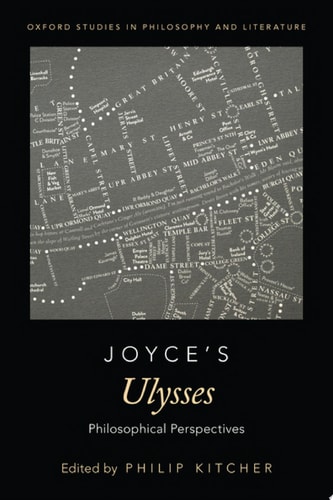
Joyce's Ulysses: Philosophical Perspectives (Oxford Studies in Philosophy and Literature)
0
0
As an Amazon Associate and affiliate partner, Menrva Books earns from qualifying purchases. Learn more
Author Description
Though James Joyce was steeped in philosophy and humanism, he has received too little attention from contemporary philosophers in comparison to many of the other titans of modernist fiction. This book probes the possibilities for thinking philosophically about Joyce's masterpiece, Ulysses, presenting readings by renowned scholars such David Hills, Garry L. Hagberg, Vicki Mahaffey, Martha C. Nussbaum, Sam Slote, Wendy J. Truran, and Philip Kitcher, who also provides an introduction to the volume that considers broader themes and situates Ulysses as a work of philosophical interest.For the central characters of Ulysses--Leopold Bloom, Molly Bloom, and Stephen Dedalus, "How to live?" is an urgent question. Each must either start anew, or attempt to recover lost paths. Chapters plumb the depths of the philosophical quandaries that present themselves to these characters--reflections on death and overcoming disgust, Leopold Bloom's evocations of conscious thought, the dominance of vision in our thinking about the senses, identity, and the possibility of revising one's values are only a handful of the subjects covered in the volume.Ulysses is an intrinsically and deeply philosophical work, and these readings provide new inroads and firm orientation for Joyce's project. Readers will come away with renewed appreciation for one of our greatest works of literature in the English language, and deepened understanding of Joyce's attempt to offer alternative ways of structuring and enriching the world of our experience.
Menrva's Summary
THE THESIS
This volume investigates the extent to which James Joyce's Ulysses functions as a repository of philosophical inquiry and a framework for examining the human condition. Philip Kitcher, a prominent philosopher of science and literature, curates a collection of essays that bridge the gap between modernist literary analysis and contemporary philosophical discourse. The contributors utilize the internal experiences of Leopold Bloom, Molly Bloom, and Stephen Dedalus to argue that the novel serves as a rigorous exploration of ethics, epistemology, and the nature of conscious thought. By situating Joyce within the tradition of humanism, the text posits that the narrative structure of Ulysses is inherently designed to challenge the reader's own moral and existential values.
THE SCOPE MAP
What You Will Find
- Philosophical analyses of death, disgust, and sensory perception within the text.
- Examinations of identity formation and the revision of personal values.
- Essays by scholars including David Hills, Garry L. Hagberg, and Martha C. Nussbaum.
Scope Limits
- The volume does not provide a comprehensive line-by-line literary exegesis of the novel.
- It does not focus on the historical or biographical context of Joyce's life outside of its philosophical relevance.
THE AUTHORITY PERSPECTIVE
Experts identify this collection as a significant contribution to the intersection of analytic philosophy and modernist studies. Readers frequently note the academic density of the prose, which assumes a baseline familiarity with both Joyce's text and standard philosophical terminology.
Page Count:
277
Publication Date:
2020-01-01
Publisher:
Oxford University Press
ISBN-10:
0190842288
ISBN-13:
9780190842284
Philosophy
English & College Success
Modernist
History & Surveys
Literary Criticism
Academic
English
Literary theory
Community Tags
Similar Books