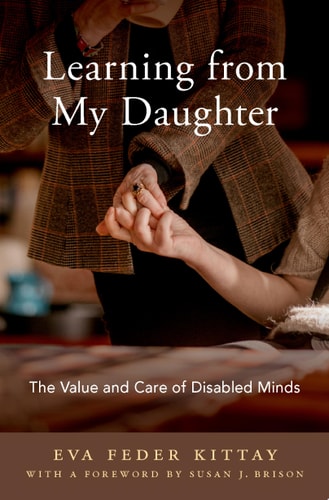
Learning From My Daughter
0
0
As an Amazon Associate and affiliate partner, Menrva Books earns from qualifying purchases. Learn more
Author Description
Does Life Have Meaning? What Is Flourishing? How Do We Attain The Good Life? Philosophers, And Many Others Of Us, Have Explored These Questions For Centuries. As Eva Feder Kittay Points Out, However, There Is A Flaw In The Essential Premise Of These Questions: They Seem Oblivious To The Very Nature Of The Ways In Which Humans Live, Omitting A World Of Co-dependency, And Of The Fact That We Live In And Through Our Bodies, Whether They Are Fully Abled Or Disabled. Our Dependent, Vulnerable, Messy, Changeable, And Embodied Experience Colors Everything About Our Lives Both On The Surface And When It Comes To Deeper Concepts, But We Tend To Leave Aside The Body For The Mind When It Comes To Philosophical Matters. Disability Offers A Powerful Challenge To Long-held Philosophical Views About The Nature Of The Good Life, What Provides Meaning In Our Lives, And The Centrality Of Reason, As Well As Questions Of Justice, Dignity, And Personhood. These Concepts Need Not Be Distant And Idealized; The Answers Are Right Before Us, In The Way Humans Interact With One Another, Care For One Another, And Need One Another--whether They Possess Full Mental Capacities Or Have Cognitive Limitations. We Need To Revise Our Concepts Of Things Like Dignity And Personhood In Light Of This Important Correction, Kittay Argues. This Is The First Of Two Books In Which Kittay Will Grapple With Just How We Need To Revisit Core Philosophical Ideas In Light Of Disabled People's Experience And Way Of Being In The World. Kittay, An Award-winning Philosopher Who Is Also The Mother To A Multiply-disabled Daughter, Interweaves The Personal Voice With The Philosophical As A Critical Method Of Philosophical Investigation. Here, She Addresses Why Cognitive Disability Can Reorient Us To What Truly Matters, And Questions The Centrality Of Normalcy As Part Of A Good Life. With Profound Sensitivity And Insight, Kittay Examines Other Difficult Topics: How Can We Look At The Ethical Questions Regarding Prenatal Testing?
Menrva's Summary
THE THESIS
How does the lived experience of cognitive disability challenge traditional philosophical definitions of the good life, personhood, and human dignity? Eva Feder Kittay, a distinguished philosopher and mother of a multiply-disabled daughter, argues that Western philosophy has historically ignored human dependency and embodiment. By integrating personal narrative with rigorous ethical inquiry, she posits that our understanding of justice and meaning must be reconstructed to account for the reality of human vulnerability and care-based relationships.
THE SCOPE MAP
What You Will Find
- A critique of traditional philosophical frameworks regarding autonomy and rationality.
- An exploration of the ethics of care and the social construction of normalcy.
- Philosophical analysis of prenatal testing and cognitive disability.
Scope Limits
- This text focuses primarily on cognitive disability and does not provide an exhaustive survey of all physical disability theories.
- This is the first volume of a two-part project and does not contain the final conclusions of the author's broader research.
THE AUTHORITY PERSPECTIVE
Scholars and readers frequently note the accessibility of Kittay's prose, which successfully bridges the gap between abstract ethical theory and lived experience. Experts highlight this work as a significant contribution to the field of disability studies, particularly for its integration of personal testimony into formal philosophical discourse.
Page Count:
400
Publication Date:
2019-01-01
Publisher:
Oxford University Press
ISBN-10:
0190844612
ISBN-13:
9780190844615
Memoir
Philosophy
Social Science
Ethics
Community Tags
Similar Books